

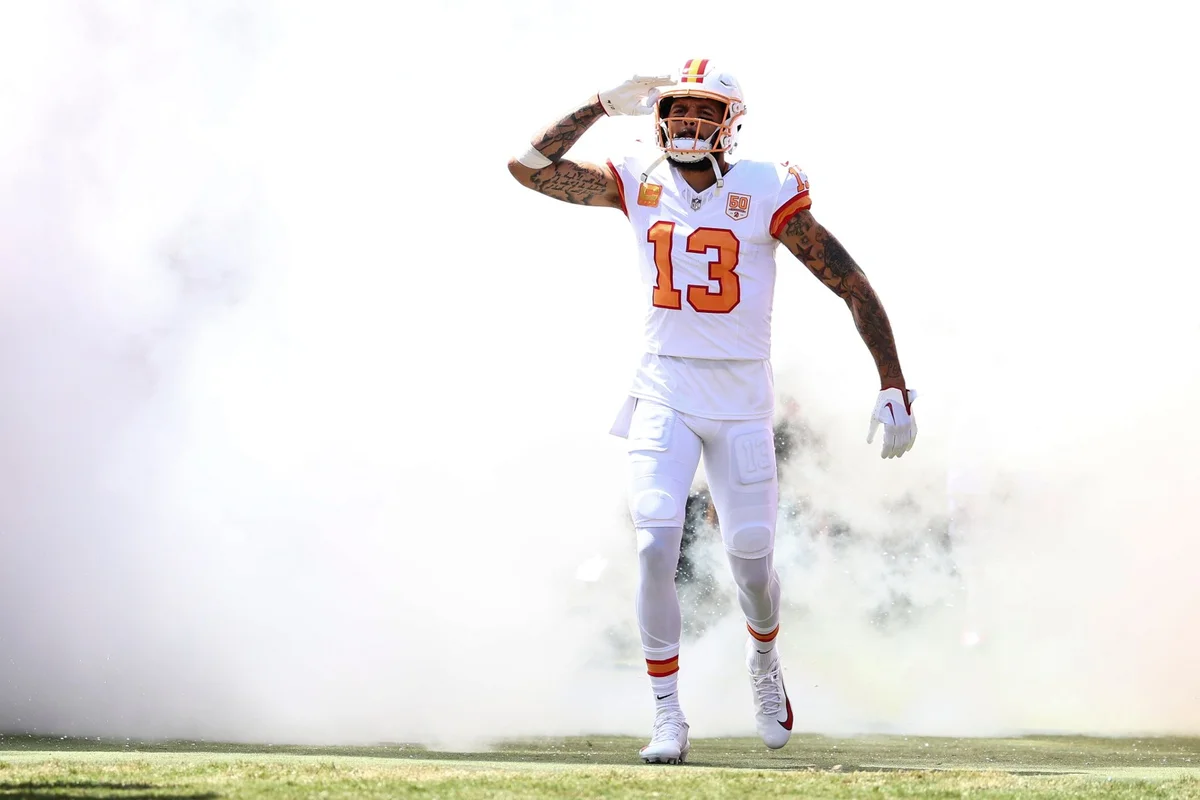
Mike Evans, the wide receiver known for his tenure with the Tampa Bay Buccaneers, is at a pivotal moment as he tests free agency in 2026. His decision to either re-sign with the Bucs or join another contender like the Buffalo Bills could significantly impact his career legacy and championship hopes. With competitive teams such as Kansas City, Houston, New England, and possibly San Francisco also in the mix, Evans must weigh the opportunity of chasing another Super Bowl ring versus remaining loyal to the franchise where he could solidify a lifelong legacy.
Buffalo Bills and Other Franchises Present Strong Cases for Evans’ Acquisition
The Buffalo Bills have been a dominant force in recent seasons, securing 11 or more wins for six consecutive years, which includes an impressive 13-4 record in 2024 and a 12-5 finish in 2025. Their consistent playoff appearances have been curtailed mainly by tough losses to Patrick Mahomes and the Kansas City Chiefs. This sustained success makes the Bills an attractive destination for Evans, who might view joining them as a strategic move to capture an elusive championship.
However, it’s not just the Bills expressing interest. Teams like the Chiefs, Houston Texans—who offer the appeal of geographic proximity to Evans’ hometown of Galveston, Texas—New England Patriots, and possibly the San Francisco 49ers are expected to make significant offers. Each franchise brings unique benefits, whether it be championship contention or emotional ties, that Evans must consider as he evaluates his next career step.
Ultimately, Evans has to assess the Tampa Bay Buccaneers’ current position as a potential Super Bowl contender. The Bucs showed promise by starting the 2025 season 6-2, but faltered with a 2-7 finish after the bye week. This inconsistent performance raises questions about their true competitiveness and the likelihood of a deep playoff run without significant improvements, particularly on defense.
Bucs Leadership Aims to Retain Evans While Addressing Roster Needs
Tampa Bay’s general manager Jason Licht, offensive coordinator Zac Robinson, and quarterback Baker Mayfield are poised to present strong cases for Evans to remain a Buccaneer. Notably, head coach Todd Bowles and Licht will likely emphasize their offseason plans to strengthen the defense, historically the team’s weaker unit. The defense ranks in the lower half of the NFL in numerous categories, which could be a major factor influencing Evans’ decision.
An important part of Evans’ thought process includes observing the Buccaneers’ early free agency moves. Should Tampa Bay succeed in signing targeted players and executing trades to improve their roster, it could encourage Evans to stay. If the team struggles with these efforts, he might lean toward exploring opportunities with other franchises.
Alternatively, Evans may be drawn by the chance to extend his career legacy elsewhere. Having witnessed Tom Brady join the Buccaneers and secure a seventh Super Bowl ring late in his career, Evans might believe he can similarly influence another franchise’s championship aspirations in the coming seasons.
Evaluating Tampa Bay’s Defensive and Offensive Roster Challenges
Tampa Bay faces critical decisions on roster construction, where defenses need more immediate attention than offense. On defense, the Buccaneers are seeking a starting outside linebacker to replace Haason Reddick, who struggled with injuries, and two inside linebackers: one likely to succeed the aging Lavonte David, who is expected to retire, and another to provide competition or potentially supplant SirVocea Dennis. Securing reliable replacements at defensive tackle is also essential, especially if Logan Hall departs in free agency.
The cornerback group requires significant reconstruction with Jamel Dean and Kindle Vildor both anticipated to leave. Benjamin Morrison, selected in the second round last year, is slated to fill the void left by Dean. Yet finding four new starting-caliber defenders through free agency and the draft remains a formidable task that Tampa Bay’s leadership must manage judiciously.
Offensively, the team’s needs are less extensive. If the Buccaneers do not re-sign tight end Cade Otton, acquiring a capable starting tight end becomes critical, as options like Payne Durham and Devin Culp are viewed as unproven for an every-down role. Additionally, the running back position might require reinforcements if Rachaad White departs. Sean Tucker, a restricted free agent, could fill that role if re-signed.
Perhaps the most pivotal offensive question is whether Evans remains with Tampa Bay. He serves as the team’s primary X receiver, a role Jalen McMillan could temporarily cover but is arguably better suited for the Z (flanker) position. The Buccaneers currently have depth at the Z receiver spot with players such as Tez Johnson, Emeka Egbuka, and Chris Godwin Jr., who can also contribute in the slot. In the event Evans leaves, the team might rely on these receivers for a transitional season before seeking a high draft pick replacement — a move potentially at odds with their defensive acquisition priorities.
Prospective Defensive Talent and Strategic Draft Decisions
The Buccaneers are considering substantial reinforcements for their defense through acquisitions and the draft. One prominent option is Ohio State linebacker Sonny Styles, a player many view as a potential generational talent. Tampa Bay holds the 15th overall draft pick, and some mock drafts predict Styles could be selected by the Dallas Cowboys at No. 12. The Bucs might trade up by exchanging a first- and third-round pick to the Miami Dolphins at No. 11 to secure Styles, allowing them to address a critical need at middle linebacker with a top-tier rookie.
Alternatively, the team may pursue a proven edge rusher like Maxx Crosby of the Las Vegas Raiders, a Pro Bowl talent commanding multiple high draft picks in trade compensation. The choice between a young, elite amateur linebacker like Styles and an established veteran like Crosby presents a fascinating strategic dilemma for Head Coach Todd Bowles and GM Jason Licht, weighing immediate impact against long-term potential.
Another defender under consideration is Boye Mafe, whose style resembles current Buccaneers power rusher Yaya Diaby but with less production. Interest in Mafe suggests a possible salary range of $12.2 million to $16.3 million annually, which some believe might not justify his impact. In contrast, veteran Joey Bosa, coming off an impressive season with Buffalo—including 54 pressures, five sacks, and five forced fumbles—could offer a one-year $11 million solution while the Bucs develop a younger edge rusher through the draft.
Edge rusher Odafe Oweh also figures into discussions, reflecting solid sack totals over the previous two years. However, concerns linger about his trade from the Baltimore Ravens despite a 10-sack campaign, and his expected multi-year contract value of $19 million to $21 million per season raises questions about Tampa Bay’s salary cap flexibility, especially alongside retaining Diaby.
Potential and Uncertainty Surrounding David Walker’s Role
Outside linebacker David Walker remains a promising but unproven talent due to injury setbacks. The 2025 fourth-round draft pick missed his rookie season after tearing an ACL during training camp but displayed strong pass-rush skills prior to the injury. Walker has yet to participate in full-contact practices, making his role in the 2026 season unpredictable.
Despite this, Head Coach Todd Bowles and GM Jason Licht are optimistic about Walker’s potential, expecting him to be cleared for OTAs after the draft. If healthy, Walker might ascend the depth chart and compete for starting duties at edge rusher, potentially replacing an injured or departing player. For now, he remains a valuable bonus to the Buccaneers’ pass rush plans rather than a guaranteed solution.
Implications of Evans’ Decision for Tampa Bay’s Future
Mike Evans’ choice in free agency will heavily influence the Buccaneers’ direction. Keeping him strengthens the offense’s core and provides veteran leadership for Baker Mayfield, who benefits from a reliable No. 1 receiver. Losing Evans, though, could compel the team to allocate high draft resources to fill that void, complicating their efforts to bolster the defense simultaneously.
For Tampa Bay, demonstrating a clear, actionable plan to improve its defense and overall competitiveness could sway Evans to commit his future to the organization. Conversely, if Evans opts to join another contender, it signals a long-term rebuild phase for the Buccaneers. Given his history and connection to the franchise, however, many hope the free agency period brings a resolution keeping Evans in Tampa Bay’s signature red and pewter uniforms.
