Las Vegas Raiders Overview
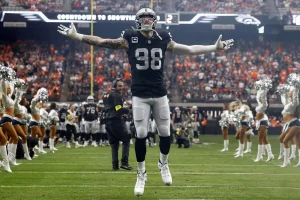
The Las Vegas Raiders are a professional American football team based in the Las Vegas metropolitan area. They compete in the National Football League (NFL) as a member of the American Football Conference (AFC) West division. Founded on January 30, 1960, and originally known as the Oakland Raiders, the franchise has also played in Los Angeles before relocating to Las Vegas in 2020. The team is owned by Mark Davis and plays home games at Allegiant Stadium in Paradise, Nevada, while operating from the Intermountain Health Performance Center in Henderson, Nevada.
The Raiders are recognized for their silver and black uniforms, their passionate fan base known as Raider Nation, and a tradition that includes three Super Bowl championships and four AFC titles. Their official mascot is Raider Rusher, and they carry nicknames such as the Silver and Black, the Men in Black, and The World’s Team. The team’s official website is raiders.com.
Founding and Organizational Origins
The city of Oakland, California, was awarded the eighth American Football League (AFL) franchise on January 30, 1960. A gathering of local civic leaders and businessmen, chaired by former U.S. Senator William Fife Knowland, formed a limited partnership to own the team. Managing general partner Y. Charles (Chet) Soda led the group, which included Ed McGah, Robert Osborne, F. Wayne Valley, Harvey Binns, Don Blessing, and Charles Harney.
A “name the team” contest held by the Oakland Tribune initially produced the name Oakland Señors, but the choice was widely mocked and replaced nine days later by the Oakland Raiders. The original colors were black, gold, and white, and a pirate-style emblem inspired by actor Randolph Scott was introduced. The Raiders finished their first campaign with a 6–8 record and lost $500,000, forcing the ownership group to seek outside financing.
After the 1962 season, F. Wayne Valley hired Al Davis, a former San Diego Chargers assistant coach, as head coach and general manager. Davis changed the team colors to silver and black and introduced the “vertical game” offensive philosophy. Under his leadership, the team improved to 10–4 and Davis was named the AFL’s Coach of the Year in 1963.
Growth Into NFL Competition
The Raiders became part of the newly merged NFL through the AFL–NFL merger in 1970, joining the Western Division of the American Football Conference. By 1972, Al Davis had used a revised partnership agreement to assume full operational control of the franchise. The team steadily grew into one of the most successful organizations in professional football, building a reputation for aggressive play and outspoken personalities.
Throughout the 1970s and into the 1980s, the Raiders expanded their national profile through star players, repeated playoff appearances, and memorable postseason performances. Head coach John Madden led the team from 1969 to 1978, establishing a winning culture. Tom Flores then guided the team to two Super Bowl victories after Madden’s departure, reinforcing the Raiders’ place among the league’s elite franchises.
The organization’s growth also included the construction and adaptation of several home venues, including Frank Youell Field, the Oakland Coliseum, and later the Los Angeles Memorial Coliseum. These moves reflected the franchise’s expanding ambitions and its evolving relationship with the cities it called home.
Las Vegas Raiders Competitive Journey
The Raiders’ competitive journey spans more than six decades and includes 23 playoff appearances, 15 division championships, and three Super Bowl titles. After early struggles in the AFL, the team became a consistent winner under Al Davis and John Madden. Following periods of decline and rebuilding, the franchise returned to playoff contention in the 2000s and again in 2016 and 2021.
Early Seasons and Development (1960–1969)
The Raiders struggled in their first three seasons, including a 1–13 finish in 1962 that produced a 19-game losing streak. Attendance was poor and the team played home games at Kezar Stadium and Candlestick Park before moving into Frank Youell Field in Oakland. The hiring of Al Davis in 1963 transformed the franchise, and the team reached the 1967 AFL Championship with a 13–1 record.
Oakland defeated the Houston Oilers 40–7 to win the AFL title and advanced to Super Bowl II, where they lost 33–14 to the Green Bay Packers. The Raiders captured three straight AFL West division titles from 1967 to 1969, and in 1969 John Madden became head coach, beginning one of the most successful eras in team history.
Breakthrough in the AFL and NFL (1967–1983)
The Raiders’ first breakthrough came in 1967 with the AFL Championship and a Super Bowl appearance. After the AFL–NFL merger, Oakland reached five AFC Championship Games between 1970 and 1976, finally breaking through in 1976. That season, the Raiders finished 13–1 and defeated the Pittsburgh Steelers 24–7 in the AFC Championship before winning Super Bowl XI over the Minnesota Vikings 32–14, earning their first world championship.
A second breakthrough followed in 1980 under Tom Flores, when the Raiders became the first wild card team to win a Super Bowl by defeating the Philadelphia Eagles 27–10 in Super Bowl XV. Quarterback Jim Plunkett earned Super Bowl MVP honors, and the team’s defense forced a then-record 35 interceptions during the regular season.
The third breakthrough came in 1983, when the Los Angeles Raiders finished 12–4 and dominated the playoffs. They defeated the Pittsburgh Steelers 38–10 and the Seattle Seahawks 30–14 before crushing the Washington Redskins 38–9 in Super Bowl XVIII. Running back Marcus Allen was named Super Bowl MVP after rushing for a then-record 191 yards.
Modern Program and Current Direction (2020–Present)
The Raiders moved to Las Vegas in 2020 and began play at Allegiant Stadium, a 65,000-seat facility shared with the UNLV Rebels. In December 2024, the franchise became one of the first in NFL history to sell an ownership stake to outside private equity investors, with 15 percent sold. Tom Brady and his business partner Tom Wagner of Knighthead Capital acquired a 10 percent ownership stake for $220 million, valuing the team at $3.5 billion.
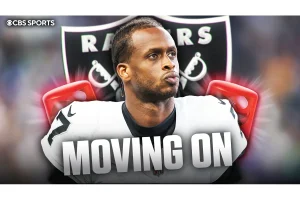
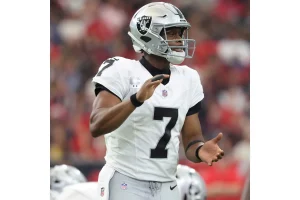
On January 25, 2025, Pete Carroll was hired as head coach, and during the offseason the team traded for quarterback Geno Smith. After one season leading the Raiders to a 3–14 record, Pete Carroll was fired on January 5, 2026. Klint Kubiak is listed as the current head coach, with John Spytek serving as general manager and Sandra Douglass Morgan as president.
Philosophy and Competitive Strengths
The Raiders have long emphasized an aggressive, hard-hitting style of play built around dominant defensive lines, physical secondary play, and an opportunistic offense. The team’s “Commitment to Excellence” and “Just Win, Baby” slogans, both coined by Al Davis, remain registered trademarks and reflect the franchise’s identity. The Raiders are known for excelling in player development and for producing multiple Hall of Famers.
Key Milestones and Major Moments
The Raiders’ most iconic moments include the “Immaculate Reception” loss in 1972, the “Sea of Hands” victory over Miami in 1974, the “Holy Roller” play in 1978, and the “Ghost to the Post” playoff win in 1977. The franchise’s three Super Bowl victories in 1976, 1980, and 1983 stand as the defining achievements of the modern era, while the relocation to Las Vegas in 2020 marked a historic new chapter.
Las Vegas Raiders Achievements and Results
The Raiders have compiled an all-time regular season record of 509 wins, 480 losses, and 11 ties through the end of the 2024 NFL season, with an additional 25–20 postseason record. Their trophy case includes three Super Bowl championships, four AFC championships, 15 division titles, and 23 total playoff appearances.
NFL Achievements
The Raiders have won three Super Bowl championships: Super Bowl XI in January 1977, Super Bowl XV in January 1981, and Super Bowl XVIII in January 1984. Their first title came under head coach John Madden, while the latter two were won under Tom Flores, the first Hispanic head coach in NFL history. The franchise has also appeared in Super Bowl II and Super Bowl XXXVII.
Conference Achievements
The Raiders have won four AFC championships, in 1976, 1980, 1983, and 2002. They have also won one AFL Championship in 1967. The 2002 AFC title run featured an 11–5 regular season, the NFL’s Most Valuable Player award for quarterback Rich Gannon, and playoff victories over the New York Jets and Tennessee Titans before a Super Bowl XXXVII loss to the Tampa Bay Buccaneers.
Divisional Achievements
The Raiders have won 15 division championships, including three AFL West titles (1967, 1968, 1969) and 12 AFC West titles (1970, 1972, 1973, 1974, 1975, 1976, 1983, 1985, 1990, 2000, 2001, 2002). Their longest stretch of consecutive division titles was five straight from 1972 to 1976, followed by another three straight from 2000 to 2002.
Series Achievements
The Raiders have appeared in the playoffs 23 times across the AFL and NFL, including appearances in 1967, 1968, 1969, 1970, 1972, 1973, 1974, 1975, 1976, 1977, 1980, 1982, 1983, 1984, 1985, 1990, 1991, 1993, 2000, 2001, 2002, 2016, and 2021. The franchise has developed numerous Hall of Famers, including 17 players plus coaches Al Davis, John Madden, and Tom Flores, contributing to a total of 31 Hall of Famers associated with the organization.