

MILAN, ITALY — Zach Werenski, Team USA defenseman, is adapting to an unfamiliar addition to his uniform at the Milano Santagiulia rink: a mandatory neck guard. Starting with the upcoming 2026 Winter Olympics in Milano Cortina, neck protection will be required for all players, marking a significant shift for NHL athletes who previously competed without this safety gear.
This new requirement stems from a critical safety concern following a tragic incident, which prompted the International Ice Hockey Federation (IIHF) to enforce cut-resistant neck guards at all levels of competition.
Background and Context Behind the New Rule
Historically, neck guards were optional for NHL players competing in the Winter Games. However, this changed after the 2023 death of Adam Johnson, who lost his life when Matt Petgrave’s skate blade caused a fatal neck injury during a game in England’s Elite Ice Hockey League. In response, the IIHF Council mandated neck laceration protectors at all its events, including the Olympic tournament starting February 11 through 22, 2026.
Players arriving in Milan have been introduced to various forms of neck protection, such as loose straps and extended-collar undershirts, aiming to prevent similar tragedies. While some NHL veterans were reluctant to adopt the gear, many are making efforts to familiarize themselves with the new equipment during team training sessions.
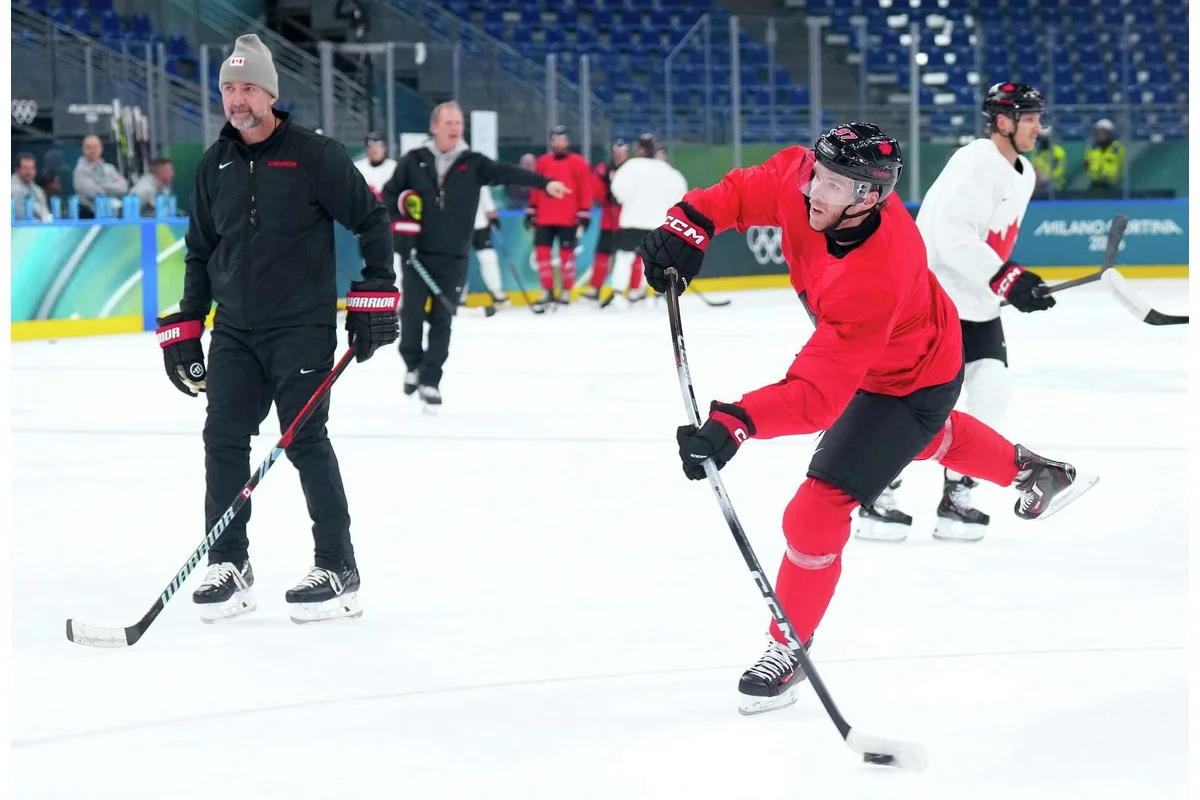
Players Adjusting to Neck Guards in Practice
Zach Werenski described the neck guard as “light” and “very easy” to wear, recalling that while his experience at the World Championship in 2025 was warmer due to the additional protective shirt, the Olympic version feels more comfortable. Jack Eichel shared that wearing the neck guard is a new experience for him as he does not use one in the NHL.
“It’s not bad… I mean, you can feel it a little bit, right? I think you’re usually more free. But it’s not like a hindrance or anything,”
Eichel said after the Team USA practice.
Despite initial reservations, players are largely accepting the change as part of international play, seeking the most comfortable option available while adapting to the added layer of protection.
Mixed Reactions Among Top Players
U.S. captain Auston Matthews acknowledged that while few players enjoy wearing the neck guard, once on the ice, it becomes less noticeable. Unlike the neck guards, many athletes have already incorporated cut-resistant sleeves on their wrists and ankles in their regular playing gear. This growing emphasis on safety reflects heightened awareness following the tragedy that prompted the change.
T.J. Oshie, known for his Olympic shootout heroics, is a leading advocate for neck protection. His Warroad performance brand has seen a notable rise in demand for cut-resistant base layers and neck guards as adult players prioritize safety.
“When you see that, you think about your own kids,”
Oshie told Sportico.
“I have my own kids, and it makes you want to go out there and find whatever is available, and you want the best.”
– T.J. Oshie, Olympian and Brand Founder
Gradual Implementation in the NHL
The NHL is also moving toward requiring neck guards. Starting in the 2026-27 season, first-time NHL players will be obligated to wear cut-resistant neck protection per the collective bargaining agreement. However, this rule will be grandfathered, exempting players with at least one NHL game before that season, similar to how face shields and helmets were phased in previously.
Brady Tkachuk indicated he has rarely worn a neck guard since youth hockey and has not considered wearing one in the NHL, though he accepts the new international rules.
“Whatever those leagues feel is safe for their players, it’s up to those individual leagues. Yeah, I’m just not used to it. Being in the NHL, I’ve never worn it in forever. So, just gotta follow the rules.”
Although Tkachuk has not tried the neck guard recently, he embraces other protective gear like cut-resistant wrist and ankle coverings. Werenski appears somewhat more open to continuing neck guard use beyond the Olympics if he finds it comfortable, noting a slight superstition about changing equipment habits but acknowledging the possibility of adopting it permanently.
“I’ve thought about. I won’t say I’m superstitious, but maybe a little bit,”
he explained.
“But maybe after this tournament, if I like it and I feel good with it, you never know.”
– Zach Werenski, Team USA Defenseman
Significance of Introducing Mandatory Neck Guards
The adoption of mandatory neck guards represents a critical advancement in player safety, driven by the sobering realities witnessed in recent years. The transition will challenge NHL veterans accustomed to playing without this equipment but reflects a broader commitment to prevent life-threatening injuries in professional hockey. With the 2026 Winter Olympics serving as the first high-profile stage for this change, the ongoing adjustment will likely influence the NHL’s culture and safety standards in seasons to come.
As players adapt to the new protective gear, the sport is taking deliberate steps toward safeguarding athletes’ wellbeing, balancing tradition with innovation in protective equipment. The implementation process may also encourage more players at all levels to embrace enhanced safety measures, possibly reducing the risk of catastrophic neck injuries in the future.
