
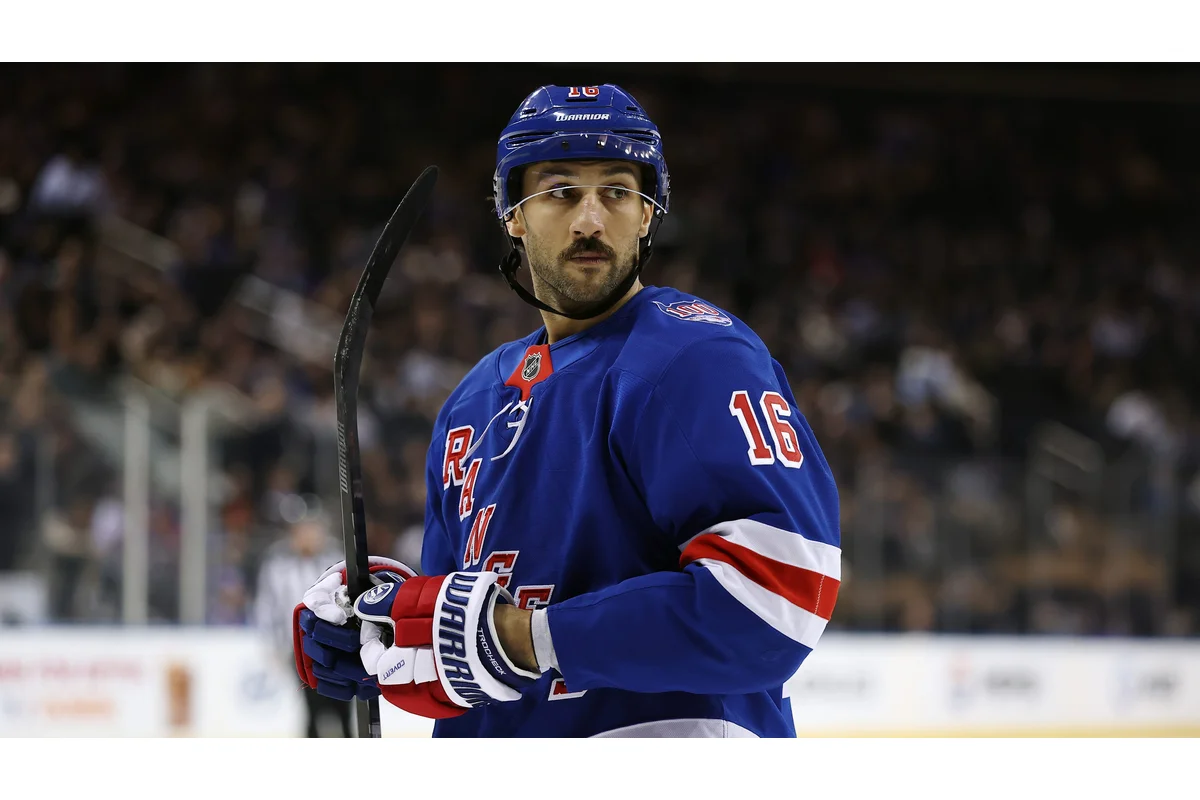
Vincent Trocheck, a key player for Team USA at the ongoing Olympics, faces heightened scrutiny amid trade talks involving the Minnesota Wild. The New York Rangers center’s Olympic performance is under the microscope as Bill Guerin, Team USA’s general manager, evaluates whether Trocheck’s play justifies a potential trade this season. While Trocheck’s 12 goals and 34 points may not shine as brightly as some of his peers like Jason Robertson or Cole Caufield, his role on the U.S. team and fit with the Wild could prove decisive in shaping his career trajectory.
Despite criticisms comparing Trocheck unfavorably to Canada’s strong fourth line—featuring Brandon Hagel, Sam Reinhart, and Brad Marchand, who have collectively scored 79 goals—Team USA believes in his value beyond offensive stats. Over the coming games, Trocheck’s impact will be pivotal not only for his country’s medal hopes but also as a live audition for the Minnesota Wild, who are in urgent need of a right-shot center.
Potential Fit Between Trocheck and the Minnesota Wild
The Minnesota Wild’s interest in Trocheck stems from their search for a versatile center capable of complementing star winger Kirill Kaprizov. While other teams, such as the Colorado Avalanche, might also pursue Trocheck, few can offer the particular role Minnesota envisions. With Matt Boldy and Joel Eriksson Ek expected to continue their pairing, Trocheck could slot in as Kaprizov’s primary center, a role that promises greater prominence and responsibility.
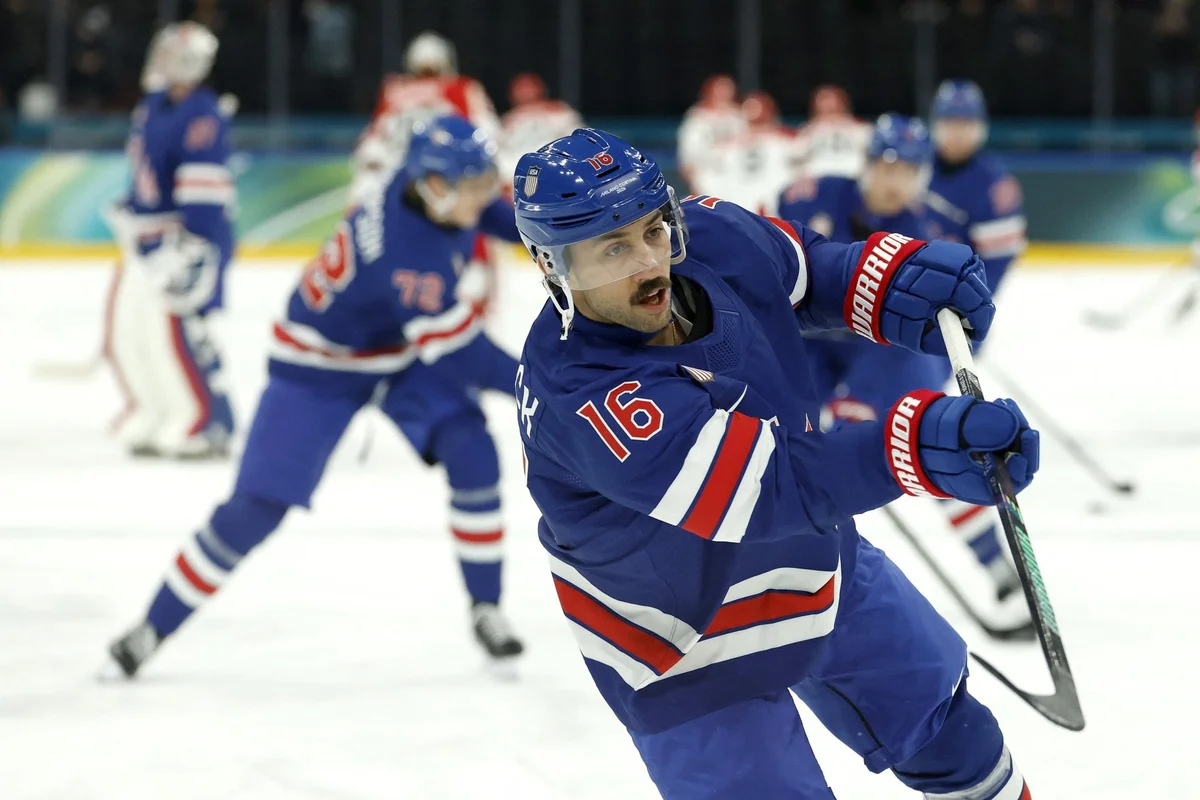
Trocheck’s strong faceoff skills—winning 56.5% overall and an impressive 68% on the power play—address one of the Wild’s long-standing needs: a dominant draw specialist who can help control possession during critical moments. This skill set could enable him to overtake players like Mats Zuccarello or Eriksson Ek on Minnesota’s top power-play unit.
Trade Considerations and Alternative Targets
Bill Guerin’s confidence in Trocheck predates the Olympics, as the Wild GM and the U.S. management had previously backed him during the 4 Nations Face-Off last year. However, the decision to pursue Trocheck involves weighing other trade options, such as younger centers like Robert Thomas or waiting for potential future opportunities involving top talents like Auston Matthews, who has notable chemistry with Boldy.
Trocheck’s availability from the New York Rangers, who are looking to offload assets amid a fire sale, presents the Wild with a potential bargain. However, it remains uncertain whether the Rangers will settle for a reasonable return or demand a steep price, which could derail trade talks despite Trocheck’s fit in Minnesota.
Performance Details From the Olympic Tournament
While Trocheck has yet to register a goal in Milan, he has contributed two assists across four games, specifically against Latvia and Denmark. His statistical footprint here, according to analytics expert Dimitri Filipovic, includes two scoring chances and pivotal playmaking moments, though these contributions rank lowest among Team USA’s forwards who play regularly.
However, Trocheck’s role has been defensive and possession-focused rather than offensive, with an average ice time of just over nine minutes per game on the fourth line. Advanced metrics show Team USA controlling 78% of expected goals at even strength when Trocheck is on ice, a strong indication of his effectiveness in driving play. Among American forwards, only Auston Matthews, Jack Eichel, and Matthew Tkachuk surpassed his possession impact.
Faceoff Efficiency and Defensive Responsibilities
Trocheck continues to excel in faceoffs, winning 24 of 35 draws at the Olympics and helping fuel Team USA’s puck possession. Yet, challenges persist: one critical goal was scored against the U.S. late in a tight game versus Sweden, on a play where Trocheck was directly involved defending against Lucas Raymond’s pass to Mika Zibanejad. Moments like this underscore the difficulty of the fourth-line defensive assignment during high-stakes, best-on-best tournaments.
Trocheck, along with teammates J.T. Miller and Brock Nelson, was relied upon for such demanding situations—highlighting his role as a reliable, hard-working player rather than a standout scorer. Such roles, while less glamorous, are crucial in international tournament contexts and could influence Guerin’s evaluation.
Implications for Trocheck’s Trade Prospects
While some observers may question Trocheck’s modest offensive output, Guerin’s assessment likely prioritizes context and overall play style. The Olympics provide a rare platform to observe Trocheck in pressure-filled moments, even if his ice time is limited and his role focused more on defense and possession. A standout performance here could strengthen Minneapolis’s commitment to acquiring him.
For Trocheck, the tournament represents not only national pride but a critical career juncture. Success in Milan could secure a coveted top-six center role with the Wild, reinforcing his value beyond NHL point totals. If Minnesota does not move forward on Trocheck, it may signal either prohibitive trade conditions set by the Rangers or a strategic pivot toward other options, keeping future possibilities open.
Ultimately, Vincent Trocheck’s Olympic showing plays a significant role in determining his NHL future, blending an evaluation of his current capabilities with projections about his fit within Minnesota’s roster. As the tournament progresses, this high-stakes environment will be a pivotal testing ground for a player at a crossroads between steady contributor and key trade acquisition.
…and 🇺🇸 pic.twitter.com/5qtd1pOyF1
— JFresh (@JFreshHockey) February 16, 2026
