
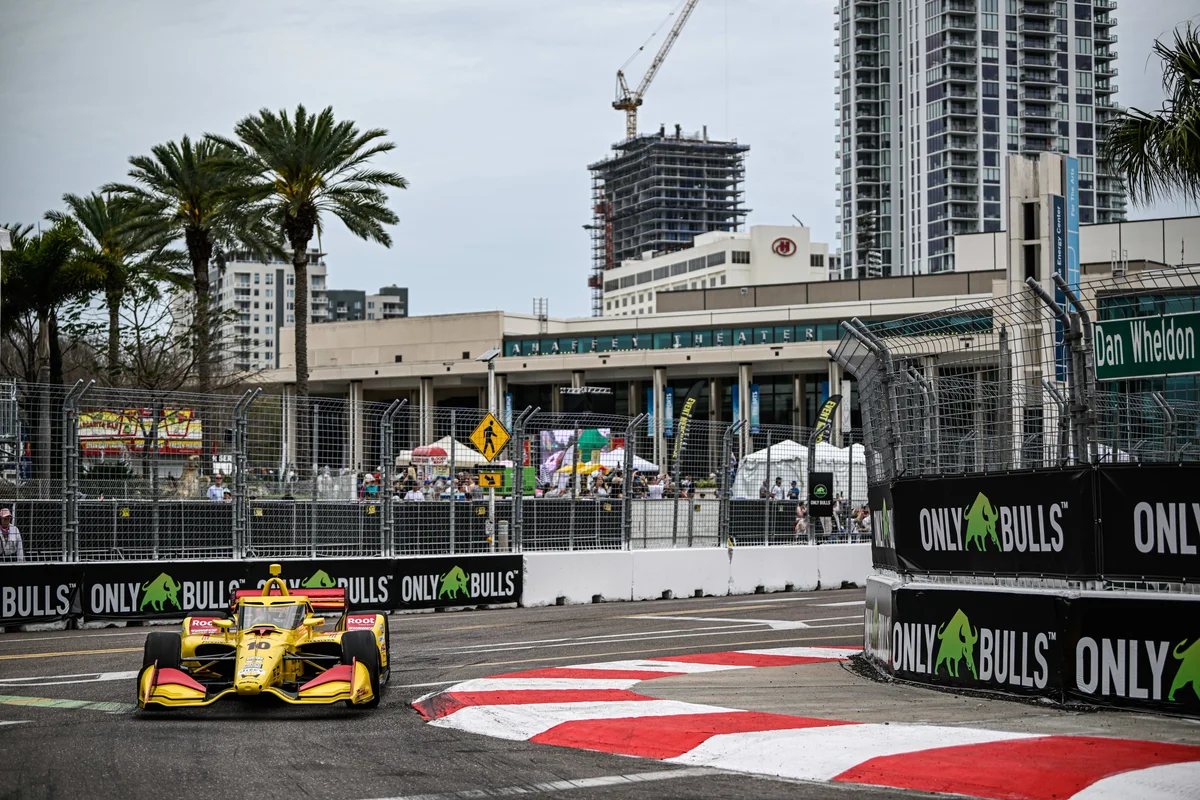
Álex Palou showcased his exceptional talent by clinching a thrilling victory at the season-opening IndyCar Grand Prix of St. Petersburg, shocking those who doubted his consistency entering 2026. The race unfolded on the streets of St. Petersburg, Florida, with Palou overcoming fierce competition to secure first place, while Scott McLaughlin held on to second after starting from pole position, and Christian Lundgaard made an impressive climb into third.
Early Race Developments and Initial Chaos
The race began with Scott McLaughlin leading the pack, followed closely by Marcus Ericsson and rookie Dennis Hauger. Palou quickly advanced to third, leaving Hauger behind in the opening laps. However, the calm was short-lived as contact between Sting Ray Robb and Santino Ferrucci triggered a crash that also took out Mick Schumacher. While Robb managed to continue, Ferrucci and Schumacher were forced to retire, ending their debuts in the 2026 season prematurely.
As the caution period faded, McLaughlin maintained his lead ahead of Ericsson and Palou. Marcus Armstrong secured fourth place, and Hauger dropped to fifth. At the restart on Lap 6, McLaughlin pushed ahead with Ericsson close on his tail, setting the tone for a competitive race as drivers battled for position across the field.
Mid-Race Battles and Mechanical Challenges
Romain Grosjean, returning to IndyCar with Dale Coyne Racing, engaged in a tight contest with David Malukas for sixth place. Despite a challenging flat spot on his front left tire, Malukas held off Grosjean until the tire gave out on Lap 12, forcing him to pit and dropping him a lap behind the leaders.
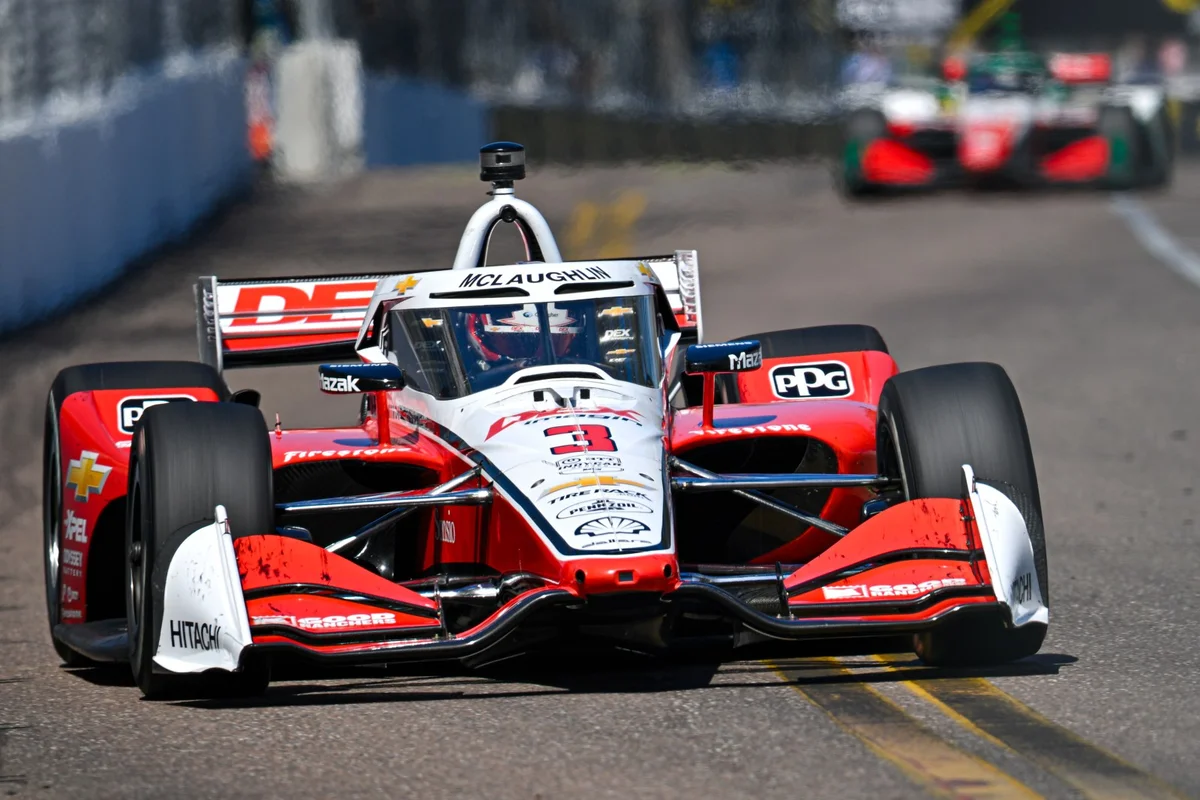
Will Power‘s race took a hit on Lap 22 after wall contact damaged his rear suspension. Despite his team’s efforts, the No. 26 Andretti car could not be repaired, forcing Power to retire early. Meanwhile, McLaughlin extended his lead over Ericsson by nearly a second, with Palou sitting about 1.5 seconds behind in third place. Christian Rasmussen’s spin following contact with Kyffin Simpson caused minor disruption but no major incidents, allowing the race to continue under green flag conditions.
Strategic Pit Stops Shake Up the Field
Pit stop strategies began to influence the race dynamics around Lap 35, with Pato O’Ward and Christian Lundgaard pitting from mid-pack and emerging near the back. McLaughlin followed on Lap 36 to switch from hard to soft tires, relinquishing the lead temporarily to Ericsson, who then headed to the pits himself alongside Hauger. This sequence elevated Palou, Armstrong, and Scott Dixon to the leading positions before Armstrong pitted on Lap 38.
The pit cycle resulted in Armstrong and Ericsson overtaking McLaughlin, intensifying the competition with the two battling for track position around sixth and seventh places. On Lap 40, a further shake-up occurred as Dixon lost his rear right tire after a pit stop, prompting the second caution while Louis Foster assumed the lead.
Late-Race Sprint and Position Changes
When the race resumed on Lap 44, Palou seized the lead ahead of Ericsson and McLaughlin, with Foster heading to the pits. Power made a return to the track after repairs, although running 26 laps behind, using the opportunity to gain experience despite being out of contention for points.
Palou rapidly distanced himself, holding an impressive lead of over eight seconds at one point. Close behind, Ericsson and McLaughlin battled fiercely with Armstrong and Kyle Kirkwood, the latter having surged to fifth place after a remarkable 13-place climb. McLaughlin eventually overtook Ericsson on Lap 65 to reclaim second, while Armstrong fell to sixth.
Final Stages and Decisive Moves
Subsequent pit stops shuffled the leaderboard, allowing McLaughlin to briefly regain the lead before a later stop dropped him to tenth position. Kirkwood capitalized on this, overtaking McLaughlin despite a tire-to-tire contact that left both drivers on edge but still in the race. Palou reclaimed the lead by Lap 74, followed by Foster and Felix Rosenqvist.
Kirkwood remained the only competitor able to challenge Palou’s advantage, narrowing the gap to under six seconds with 18 laps remaining. Nonetheless, Kirkwood eased off slightly to conserve fuel, enabling Palou to pull away again as McLaughlin closed in to battle for second.
Final Laps and Podium Resolution
With seven laps left, McLaughlin and Lundgaard overtook Kirkwood in quick succession to move into second and third place. Lundgaard pressed McLaughlin hard, seeking to improve on third, but in the closing moments, McLaughlin held firm. Palou crossed the finish line nearly 13 seconds ahead of McLaughlin, sealing a commanding victory.
The race concluded with Kirkwood narrowly missing the podium in fourth place, capping an impressive comeback after a tough qualifying session. O’Ward finished fifth, followed by Ericsson, Josef Newgarden, Grosjean, and Rinus VeeKay. Rookie Dennis Hauger delivered a strong performance to round out the top ten, signaling a promising start to his 2026 campaign with Dale Coyne Racing.
Impact of Palou’s Victory and Future Implications
Palou’s victory at the IndyCar Grand Prix St. Petersburg underlines his status as a leading contender for the 2026 season. His ability to navigate through early chaos, execute strategic pit stops, and dominate the final stages reinforces the high expectations surrounding him and Chip Ganassi Racing. Scott McLaughlin’s strong showing despite missing out on the win indicates that Team Penske remains a serious threat, while Christian Lundgaard’s climb from outside the top 10 to the podium highlights Arrow McLaren‘s competitive potential.
As the series moves forward, fans can anticipate intense battles among these drivers, with strategies and resilience playing critical roles in the tightly contested field. Palou’s commanding performance in St. Petersburg sets a challenging benchmark for rivals aiming to dethrone the Spaniard in the upcoming races.
