
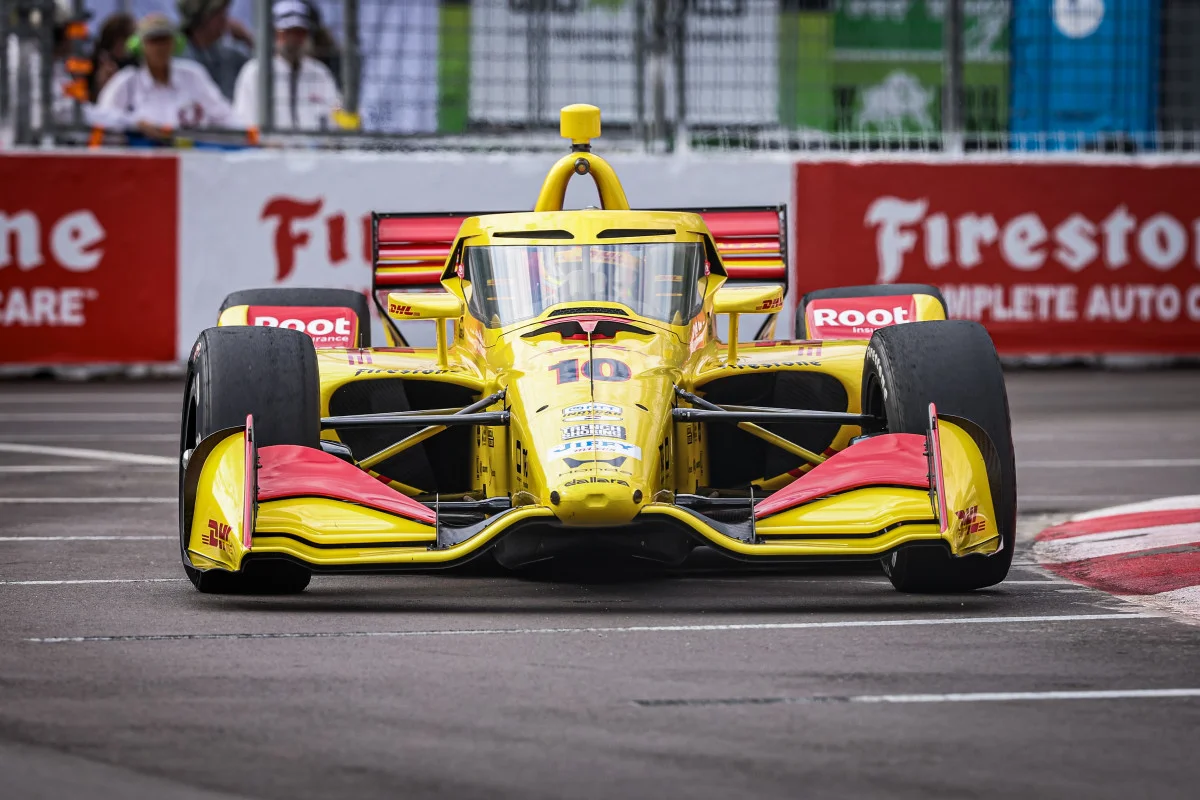
Reigning IndyCar champion Alex Palou demonstrated his championship credentials once again by winning the Grand Prix of St. Petersburg. The Spaniard, driving for Chip Ganassi Racing Honda, started from fourth position but executed an early strategic overcut during pit stops to take and maintain the lead for the final 62 of 100 laps. Palou ultimately finished 12.4948 seconds ahead of polesitter Scott McLaughlin, solidifying a strong start to his title defense.
Race Developments and Key Moments
Scott McLaughlin of Team Penske led the race for 34 laps but was unable to challenge Palou for the win, settling for second place. Christian Lundgaard, racing for Arrow McLaren, impressively moved from 12th on the grid to claim the last podium spot. Kyle Kirkwood of Andretti Global, who began from 15th, was forced to conserve fuel late in the race. This dropped him from a potential second-place finish to fourth, though he stayed ahead of Pato O’Ward in fifth, also representing Arrow McLaren.
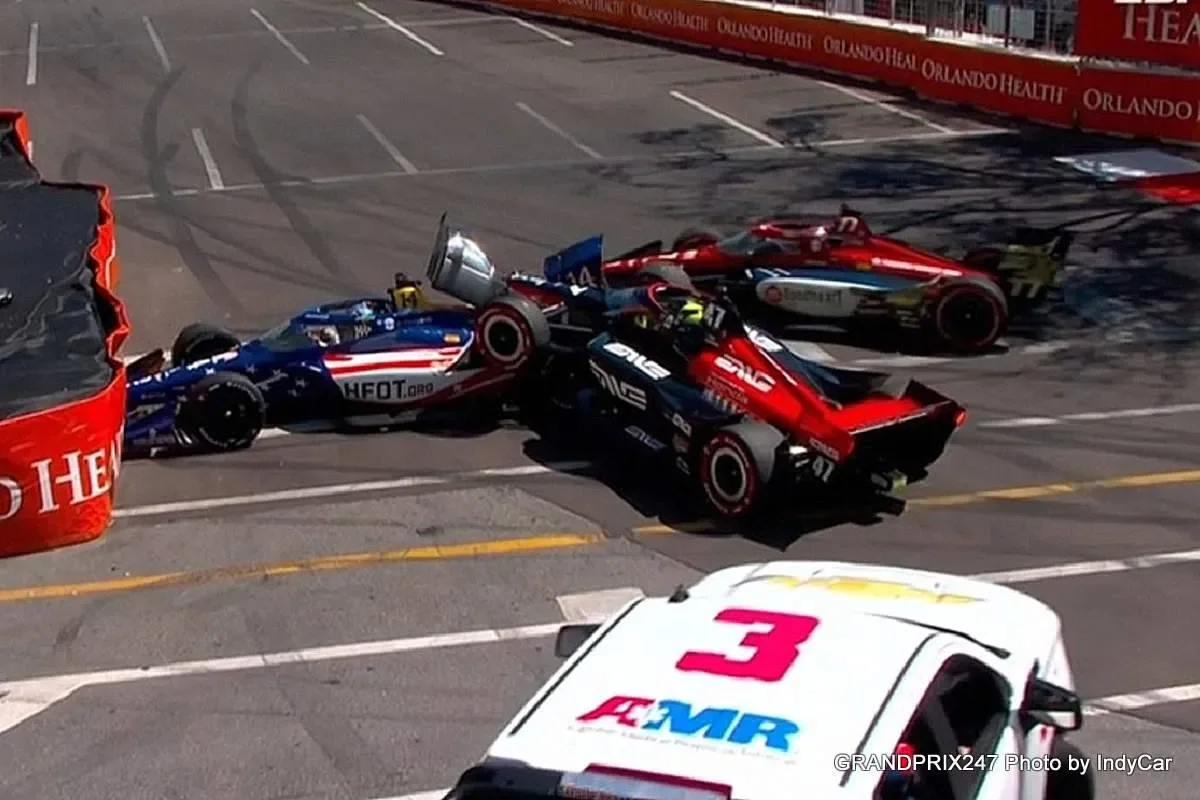
The race start featured chaos behind the leaders as the field approached Turn 4. Sting Ray Robb of Juncos Hollinger Racing clipped the inside curb and collided into Santino Ferrucci‘s AJ Foyt Racing Chevrolet, sending both into the tire barrier. Rookie Mick Schumacher, making his series debut with Rahal Letterman Lanigan Racing, then climbed over the back of Ferrucci’s car. While Robb continued after receiving a penalty for avoidable contact, both Ferrucci and Schumacher were forced to retire early.
Incidents Impact Drivers’ Fortunes
Will Power’s anticipated Andretti debut coincided with his 45th birthday but turned problematic after contact at Turn 10—the same corner where he crashed in practice—led to a right-rear suspension failure. Power’s team retired the car behind the wall on lap 21, though he returned roughly halfway through the race, finishing 30 laps down. Pit stops began on lap 31, enabling Palou to cycle into the lead ahead of Marcus Ericsson and McLaughlin.
Shifts in Position and Tire Strategies Influence Race Outcome
Ericsson’s performance declined as the race progressed, allowing McLaughlin to pass on the inside at Turn 1 during lap 65. Christian Lundgaard capitalized on Ericsson’s struggles to overtake him shortly afterward. On lap 66, Ericsson pitted for softer alternate tires, attempting to regain pace. Palou responded by pitting on lap 67 with a comfortable 14-second advantage, switching from soft to more durable primary tires.
Kirkwood’s undercut strategy during the pit cycle enabled him to leapfrog several competitors, including an aggressive outside pass on McLaughlin at Turn 4. Despite late pressure from Lundgaard, McLaughlin maintained his hold on second place as Palou secured the victory decisively.
Official Race Results from the St. Petersburg Event
The final classification underscored Palou’s dominance with a race time of 1:52:21.6997, finishing 12.4948 seconds ahead of McLaughlin. Christian Lundgaard completed the podium, followed by Kyle Kirkwood and Pato O’Ward. The event marked a competitive opening round that hinted at an intense championship fight ahead.
Implications for IndyCar and Next Steps
Palou’s impressive performance at the Grand Prix of St. Petersburg not only illustrates his readiness to defend his title but also sets a challenging pace for his rivals, including McLaughlin, Lundgaard, and Kirkwood. Team strategies, tire management, and the handling of on-track incidents will remain critical in the tightly contested season. With rookies like Mick Schumacher showing potential and established drivers regrouping after early setbacks, the IndyCar championship promises to remain unpredictable and fiercely competitive.
“Scott McLaughlin, Team Penske”
— Gavin Baker / Lumen via Getty Images
