
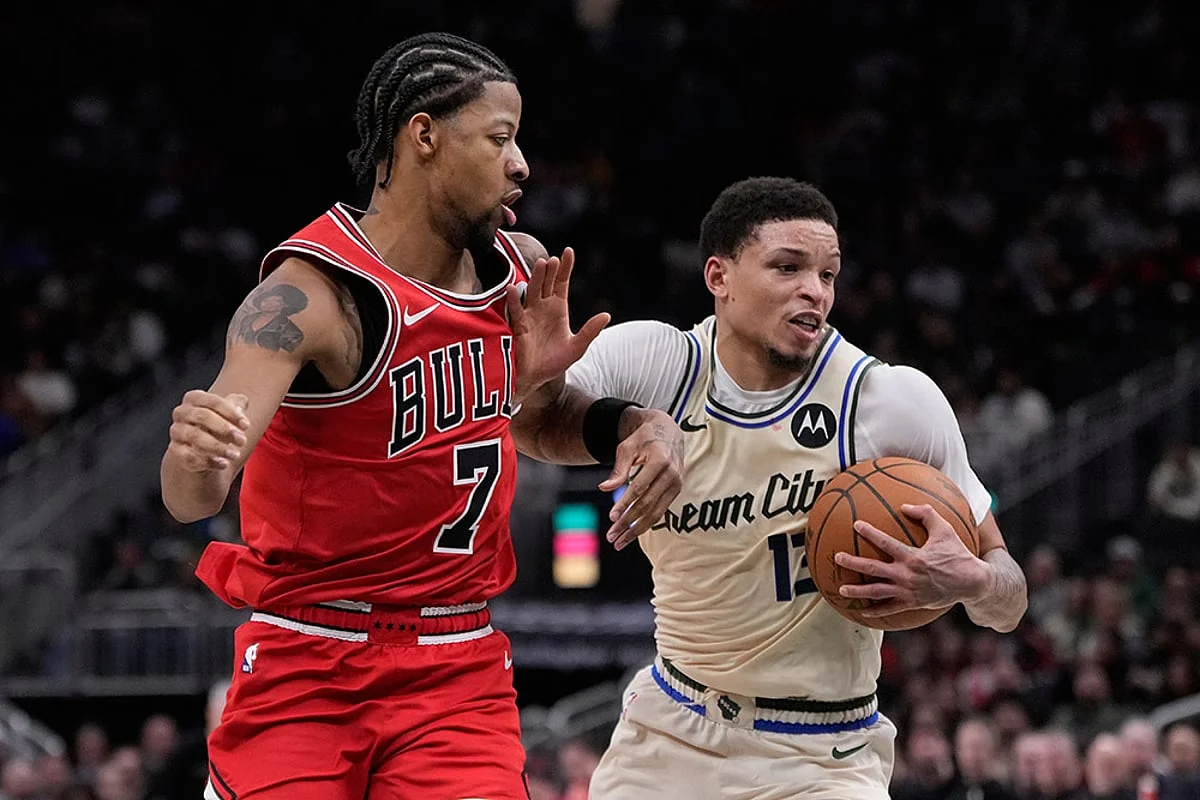
The Chicago Bulls made a series of significant moves during the NBA trade deadline, aiming to adjust their roster and financial situation as they prepare for the future. These trades, conducted in late February, involved several key players and draft picks, reflecting the Bulls’ strategy to reshape the team’s core and position themselves for upcoming seasons.
Strategic Acquisition of Dario Šarić and Additional Draft Picks
In a move signaling readiness to maneuver financially, the Bulls acquired forward Dario Šarić along with two second-round draft picks, sending Emmanuel Miller to complete the deal. Acting opportunistically as a third party, Chicago absorbed Šarić’s contract, which allowed them to secure valuable future draft assets. This calculated decision enhances their draft capital and reflects savvy front-office management.
This transaction received a strong positive evaluation, earning a grade of A for its smart positioning and long-term benefits.
Bringing in Jaden Ivey Through a Three-Team Swap
In a notable multi-team trade, the Bulls landed guard Jaden Ivey and briefly acquired veteran Mike Conley Jr., exchanging Kevin Huerter and Dario Šarić. The Bulls quickly moved Conley Jr. afterward, effectively avoiding his $10 million salary cap hit. The primary focus was acquiring Ivey, a 23-year-old guard who averaged 15 points per game over five seasons but struggled with injuries in Detroit.
Despite uncertainties around his health and fit, Ivey’s youth aligns with the Bulls’ developing core, which includes players like Matas Buzelis, Noa Essengue, and Josh Giddey. This trade gives Ivey an opportunity for a fresh start, potentially strengthening Chicago’s backcourt in the coming years. The move was graded A, reflecting the Bulls’ willingness to invest in youthful potential at minimal cost.
Trading Nikola Vučević to Boston for Anfernee Simons and Draft Considerations
The Bulls sent veteran center Nikola Vučević and a second-round pick to the Boston Celtics, receiving guard Anfernee Simons and a second-round pick in return. While the immediate return appears modest, the pick acquired is reportedly one of Boston’s more valuable second-round selections, most likely originating from the Pelicans and positioned near the 32nd overall slot.
This draft pick could carry value comparable to a late first-round selection in the 2026 NBA Draft, which is projected to be deep with experienced collegiate and high-profile prospects. However, trading Vučević without a definitive center replacement suggests the Bulls are conceding the current season and viewing Simons as one more guard in an already crowded backcourt. This package earned a grade of B.
Insights from Bulls’ Executive Vice President Artūras Karnišovas Post-Deadline
Following the flurry of trades, Bulls executive vice president of basketball operations Artūras Karnišovas addressed the media, outlining the team’s direction and rationale. His comments underscored the Bulls’ commitment to a rebuilding and retooling process that anticipates roster changes and young player development as priorities moving forward.
Sending Coby White to Charlotte and Acquiring Collin Sexton and Additional Assets
The Bulls traded guard Coby White and Mike Conley Jr. to the Charlotte Hornets, receiving Collin Sexton, Ousmane Dieng, and three second-round picks. Sexton, a player comparable to White but with a stronger starting profile and efficiency, offers Chicago a different style of backcourt production. White’s ability to provide explosive bench scoring suits Charlotte’s immediate needs.
In addition to Sexton’s on-court contributions, acquiring Dieng—who brings size—helps address defensive and frontcourt depth after the team’s earlier trades involved several perimeter-focused players. The three second-round picks received enhance the Bulls’ draft assets significantly, providing flexibility for future trades or selections.
This transaction was assessed with a B grade, partly because the move ideally should have been completed earlier to maximize value and better position the team for upcoming drafts in 2025 and 2026.
The Departure of Ayo Dosunmu and Its Implications
In a trade that raised eyebrows, the Bulls sent homegrown guard Ayo Dosunmu and Julian Phillips to the Minnesota Timberwolves, receiving back Rob Dillingham, Leonard Miller, and four second-round picks. Dosunmu’s two-way play and fan connection make this a difficult loss for Chicago.
Given Dosunmu’s versatility as a contributor off the bench, the return appears underwhelming, especially with only one upcoming draft pick included relevant to the immediate offseason. This deal’s grade of D reflects disappointment in the compensation relative to Dosunmu’s potential value and role.
Exchanging Dalen Terry for Guerschon Yabusele Through New York Routing
Dalen Terry, a former first-round pick who failed to live up to expectations in Chicago, was traded to the New York Knicks. The Knicks quickly flipped him to the New Orleans Pelicans in a separate trade for guard Jose Alvarado. From Chicago’s perspective, they acquired forward Guerschon Yabusele, adding frontline depth along with an expiring contract, which opens financial flexibility.
This trade was viewed as moderately beneficial and received a B grade for adding post player depth and creating roster flexibility as the Bulls continue their roster reshaping.
Completing the Sequence: Trading Ousmane Dieng for Nick Richards
In the Bulls’ final trade of the deadline period, Chicago moved forward Ousmane Dieng to the Milwaukee Bucks in a three-team deal, acquiring center Nick Richards in return. This move aimed to add height and bolster the frontcourt behind Jalen Smith, Guerschon Yabusele, and Lachlan Olbrich.
Richards, standing at 6-foot-11, is expected to provide depth at the center position as the Bulls round out their roster for the remainder of the season. This transaction was graded C, reflecting a necessary roster adjustment rather than a transformative move.
Overall Assessment and Next Steps for the Chicago Bulls
The Chicago Bulls’ active participation at the trade deadline reshaped their roster significantly, focusing heavily on acquiring young talent and accumulating draft assets. Some moves received strong approval, particularly those involving Saric and Ivey, while others, such as the Dosunmu trade, drew criticism for insufficient returns.
These trades indicate the Bulls are prioritizing a youth movement and roster flexibility, signaling a pivot toward rebuilding and positioning for future drafts rather than immediate contention. As the offseason unfolds, how these moves translate into on-court success will depend heavily on player development and additional front-office decisions.
