
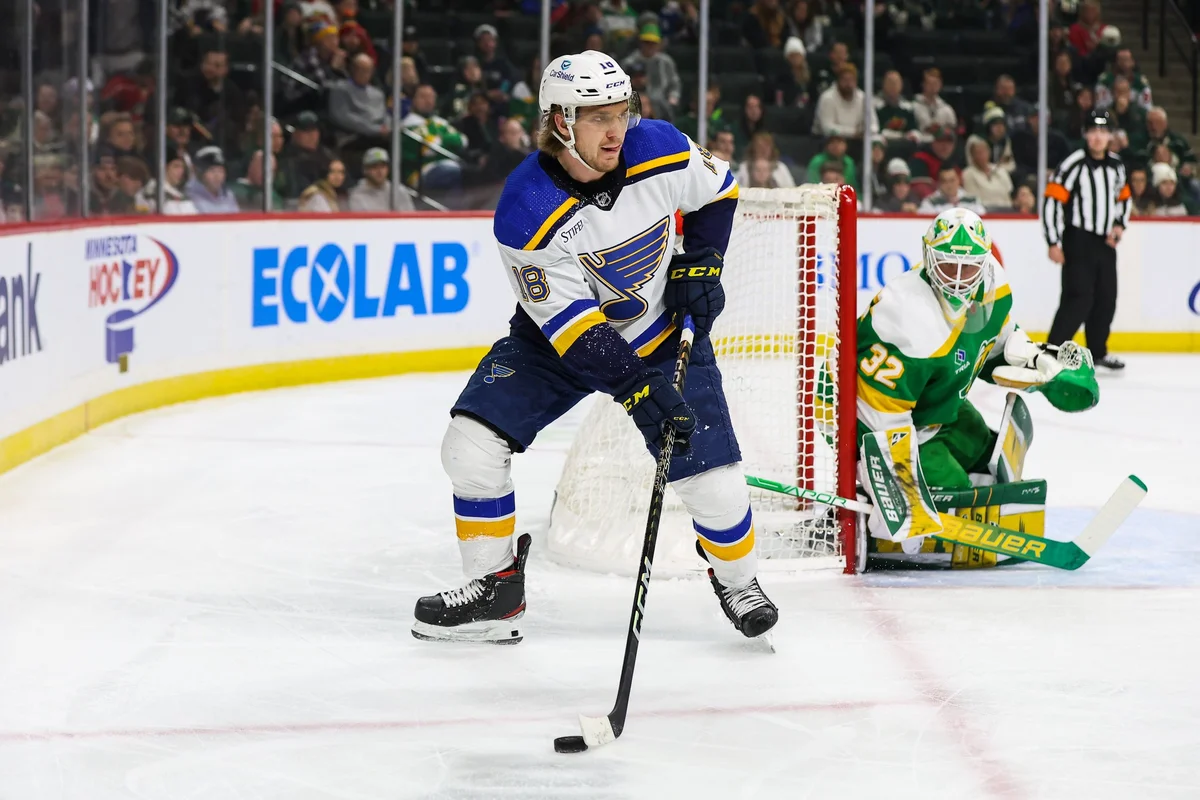
The Minnesota Wild are confronting a pivotal decision involving the Robert Thomas trade possibility as the team weighs whether to act now or wait until summer. After choosing not to make a big move last offseason despite ample cap space and a collection of prospects led by Marco Rossi, the Wild maintained flexibility that positioned them well to acquire Quinn Hughes unexpectedly. This measured approach now influences their consideration of adding Thomas, a playmaking center who fits their current needs.
Cap Space and Prospects Fuel Wild’s Trades and Future Moves
General Manager Bill Guerin has demonstrated a preference for smart aggressiveness in roster decisions, as he recently explained,
“But I also like to try to be smart.”
?Bill Guerin, General Manager. The Wild’s prior trades for players like Quinn Hughes and David Jiříček have utilized some of their prospects, but key assets such as Danila Yurov, Jesper Wallstedt, and Charlie Stramel remain available. However, another major trade could heavily impact their prospect pool, prompting discussions about whether it’s better to conserve resources.
Industry Perspectives Favor Waiting for Optimal Trade Timing
Michael Russo, host of the Worst Seats in the House podcast, suggested that Minnesota may be inclined to postpone moves involving prized prospects like Wallstedt until summer. He explained,
“Deep down, I think if the Wild are gonna trade Jesper Wallstedt, that’s gonna be a summer move, because I just don’t think you wanna make that move for Robert Thomas… just in case, all of a sudden, Auston Matthews became available. Or if the Wild decided to go with a winger, and a Brady Tkachuk became available. I just don’t think you want to waste that bullet now for a team that doesn’t have a lot of bullets anymore.”
?Michael Russo, Reporter
This cautious approach aligns with the Wild’s need to balance short-term competitiveness with long-term roster sustainability, especially as Hughes’s contract situation evolves and the team seeks postseason success to retain key players.
The Complex Value Assessment of Potential Center Acquisitions
Acquiring an established center like Robert Thomas poses notable questions for Minnesota. While other options—such as Vincent Trocheck, Steven Stamkos, or Ryan O’Reilly—might provide depth, their age and likely contracts reduce future flexibility. Thomas, in contrast, offers a younger and cost-controlled alternative. Although not a player of Auston Matthews’s caliber, Thomas has proven himself as a productive force, ranking just outside the NHL’s top 20 scorers recently and driving meaningful offense.
Robert Thomas’s Fit and Impact on Wild’s Core Lineup
Thomas’s qualities align closely with Minnesota’s roster needs. As a right-shot, playmaking center, he complements stars like Kirill Kaprizov, setting up key scoring chances and increasing offensive opportunities at even strength and on the power play. His speed and style also synergize with the fast-paced game that Hughes brings, making Thomas a catalyst for driving the team’s offense higher.
Over the past five seasons, Thomas has averaged just over a point per game, which outpaces several notable centers often sought by fans and analysts, including Tage Thompson, Tim Stützle, Elias Pettersson, Dylan Larkin, and Brady Tkachuk. Importantly, Thomas is currently available at a salary of $8.125 million annually for the next five seasons, an affordable rate compared to some of the Wild’s other core contracts.
Contract Control and Future Trade Flexibility
Thomas’s age (26) and term create a valuable asset for Guerin’s strategy. Trading a significant prospect like Jesper Wallstedt for Thomas could maintain Minnesota’s forward core strength without sacrificing future value. This becomes especially relevant if larger stars such as Auston Matthews enter the trade market during the summer; having Thomas locked in could be a strategic advantage over holding a prospect goalie like Wallstedt.
One minor concern is Thomas’s no-move clause, but his roots in the Greater Toronto Area might reduce relocation complications. This contrasts with the riskier moves involving aging centers or wingers, such as Nazem Kadri, Alex Tuch, or Jordan Kyrou, whose acquisitions could limit Minnesota’s options going forward.
Balancing Opportunity Against Waiting for a Better Deal
Even though Thomas isn’t the transformative talent Kaprizov or Hughes represent, he is a play-driving center—the Wild’s most pressing positional requirement. His blend of productivity, youth, and an affordable contract suggest that Thomas is uniquely poised to retain value over time compared to other trade targets. The hesitation about trading for Thomas often stems from the hope that a more elite player might become available, but waiting too long could result in missed opportunities.
For Minnesota and GM Bill Guerin, overcoming the reluctance to commit to Thomas may be essential. Securing a player who can elevate the team’s middle and power-play cycles could strengthen Minnesota’s playoff prospects substantially and solidify their competitive window around their young stars Kirill Kaprizov and Quinn Hughes.
