
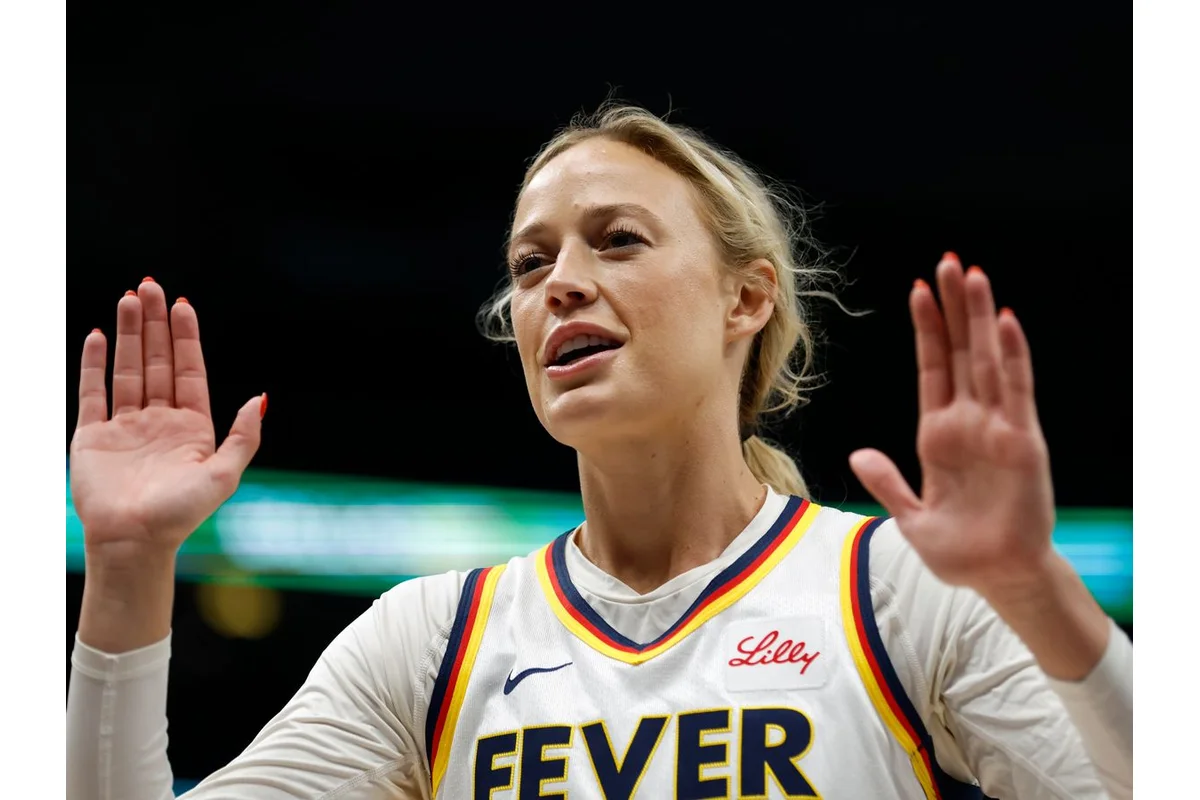
The Women’s National Basketball Association (WNBA) and the Women’s National Basketball Players Association (WNBPA) held their first meeting with players present since October on Monday, continuing negotiations for a new collective bargaining agreement (CBA). Indiana Fever forward Sophie Cunningham expressed frustration over how the ongoing impasse between players and league owners casts a negative spotlight on the WNBA just months before the 2026 season is set to begin.
With roughly three months remaining before the season kickoff, Cunningham highlighted the growing fatigue among both sides over the stalled talks, noting that other sports communities are observing the dispute closely.
Sophie Cunningham Raises Concerns About League’s Reputation
On her podcast Show Me Something, Cunningham shared her perspective on the league’s current state amid negotiations. She explained the puzzlement from other sports professionals over the WNBA’s failure to capitalize on successful frameworks already established by leagues such as the NHL, NBA, and MLB.
“I’ve been around a lot of NHL people, a lot of NBA people, a lot of MLB people, and everyone is like, ‘Why are you guys not using what we’ve already built?’”
Sophie Cunningham, Indiana Fever forward
“This is a successful business. Why is the W not learning and leaning on people who are already building that type? … Our negotiation and all that, how that’s going, it’s like we’re the laughing stock of sports right now. That is so f—ing typical.”
Sophie Cunningham, Indiana Fever forward
Background on Work Stoppages in Major Sports
In its 29-year history, the WNBA has never experienced a lockout, unlike other major U.S. sports leagues. Major League Baseball (MLB) was the most recent of the country’s five major sports to enter a lockout, though it did not cancel any games during its 2021-22 stoppage. The last cancellation of games due to a work stoppage happened during the 2012-13 NHL season, when the regular schedule was shortened to 48 games per team.
Ongoing Discussions and Owner Divisions on Investment
At Monday’s three-hour negotiation session, the WNBA informed players that it had no new CBA proposal ready. The last offer, made in early December, proposed increases to the salary cap and maximum player salaries to $5 million and $1.3 million respectively. These amounts represent roughly five times the current levels, yet remain about half of what the WNBPA’s counteroffer reportedly requested.
Cunningham highlighted a divide among team owners regarding commitment to player investment, pointing out that some owners demonstrate a “player-first” attitude while others lean more toward league interests.
“From my perspective, it seems like that half of our owners are player-first and really wanting to invest, and the other half are more league-side,”
Sophie Cunningham, Indiana Fever forward
“But it’s weird because they do want to invest, but you just don’t have owners who are willing to spend.”
She singled out ownership groups in New York, Seattle, and Phoenix as particularly supportive of players, praising their willingness to accept short-term losses in favor of long-term gains through attracting top talent and increasing ticket sales.
“Owners who are most involved I would say right now would be New York, Seattle and Phoenix. They have funds, and they’re awesome. Their ownerships are completely awesome. They are very player-first. They know that you’re going to maybe lose a little money on the front end, but you’ll get it back if you invest. At the end of the day, depending on where these negotiations go, if you give these players what they want, you’re going to get all the best players. Therefore you’re going to win. Therefore your ticket sales are going to be up. Everything’s going to be up.”
Sophie Cunningham, Indiana Fever forward
Player Compensation Remains Central to CBA Talks
The key sticking point in the negotiations concerns player salaries. Minnesota Lynx forward Napheesa Collier noted last month that progress has been made on other significant issues such as maternity leave, child care benefits, and charter flight availability. However, resolving compensation disputes has proven more difficult.
As the negotiation process continues, the WNBA’s future stability and growth depend heavily on reaching a compromise that adequately recognizes player value while ensuring league sustainability. The outcome will influence the league’s ability to retain its top stars and expand its fanbase heading into the 2026 season.
