
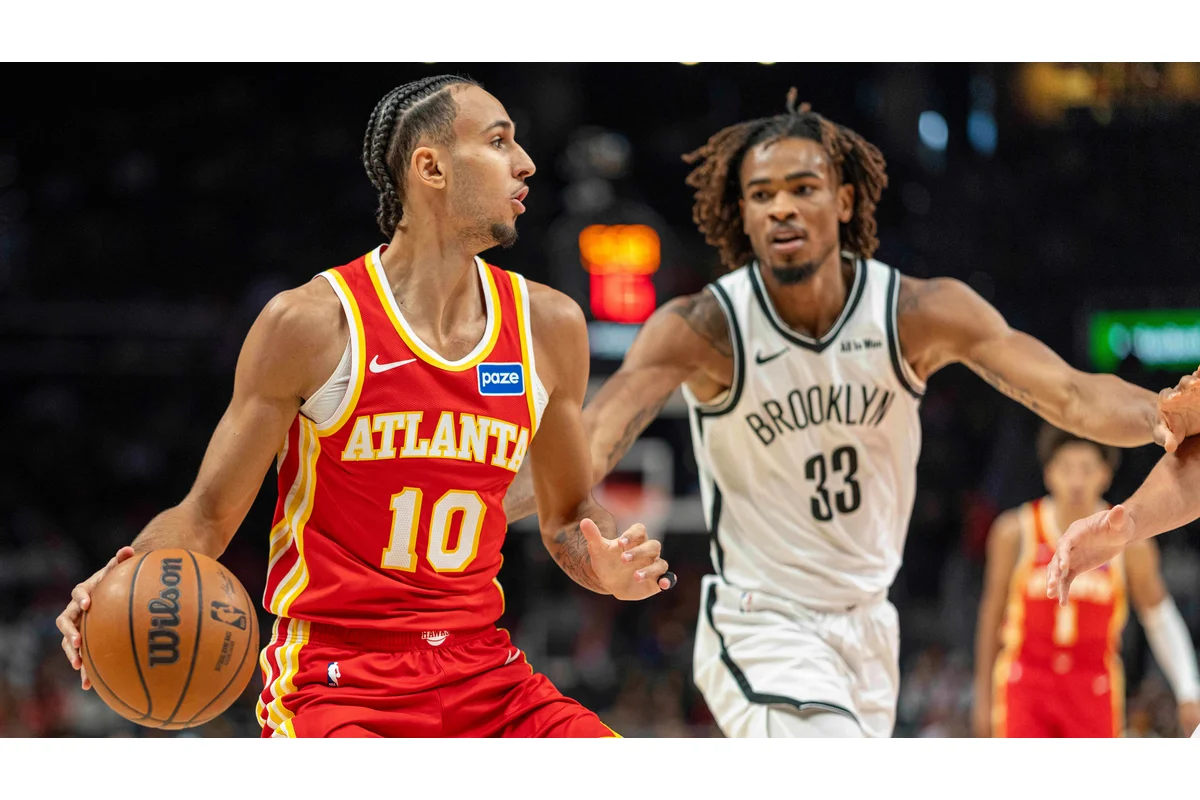
The Atlanta Hawks find themselves at a critical juncture in their season as they face the Portland Trail Blazers in a key matchup at State Farm Arena in Atlanta, Georgia. With the Hawks sitting 10th in the Eastern Conference and tied with the surging Charlotte Hornets, this game offers a significant opportunity to strengthen their position in the tightly contested playoff race while continuing their Atlanta Hawks playoff push.
Current Standings and Playoff Outlook
After securing two decisive victories over the Washington Wizards, a team currently struggling due to injuries, the Hawks must now confront the consequences of earlier-season inconsistencies. Their 10th-place standing, shared with the Hornets who have been improving rapidly, means Atlanta is likely to settle into either the 9th or 10th seed if the standings hold. Being in these seeds implies having to win two play-in games to guarantee a playoff spot. Fortunately, the Hawks face a relatively manageable schedule in their remaining games, making this upcoming contest against Portland a critical barometer for their ability to capitalize on upcoming opportunities.
The Trail Blazers themselves are fighting to secure a place in the post-season via the play-in tournament. Recently defeated by the Charlotte Hornets, the Blazers may be without key player Deni Avdija in this game, which could provide the Hawks an advantage if they are able to dominate at home.
Statistical Insights into Team Performance
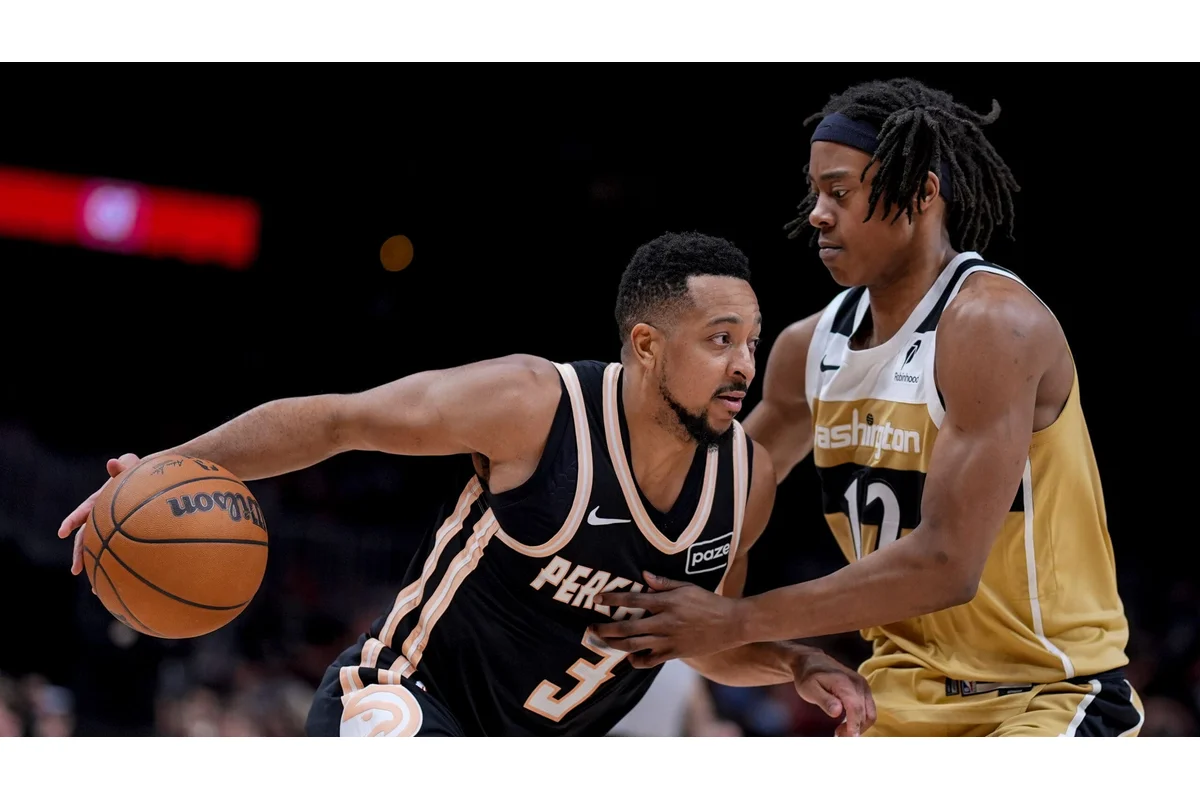
Atlanta’s offensive consistency has fluctuated throughout the season, though their back-to-back games against Washington bolstered several stats. The Hawks rank 10th in scoring, 15th in field goal percentage, 7th in three-point shooting percentage, but only 20th in free-throw percentage. They are 22nd in total rebounds, with a stronger defensive rebounding rank (14th) than offensive rebounds (22nd). Atlanta leads the league in assists per game and ranks 10th in turnovers, reflecting an ability to manage ball movement effectively. Their overall offensive rating places them 19th across the NBA.
Defensively, Atlanta has shown some improvement, although performances against the struggling Wizards can be misleading. The Hawks are 21st in points allowed, 20th in opponents’ field goal percentage, and hold the 12th rank in three-point defensive percentage. They struggle on the glass, ranking 26th in rebounds allowed but compensate with strong steal numbers—5th in the league—and a mid-tier (18th) blocking rate. Their defensive rating currently stands at 14th.
Portland’s offensive output is less impressive, further hampered by Avdija’s possible absence. The Blazers rank 17th in points per game but are near the bottom in shooting efficiency: 28th in field goal percentage, last (30th) in three-point accuracy, and 25th in free throws. They excel in rebounding (8th), particularly on the offensive glass (2nd), but turn the ball over frequently and struggle with assists, placing 27th and 30th, respectively. While additions like Vit Krejci at the trade deadline aimed to improve shooting, the team remains near the bottom in scoring efficiency.
Defensively, the Blazers boast a strong rim protector in Donovan Clingan and perimeter defenders Jrue Holiday and Toumani Camara, yet their overall defense is middle to lower tier. They rank 24th in points allowed, 21st in opponents’ field goal percentage, 20th in three-point defense, but perform better in rebounding defense (12th) and blocks (12th), with a defensive rating of 19th.
Factors Favoring an Atlanta Victory
One key advantage for the Hawks could be Portland’s weakness in spot-up shooting during crucial moments. The Trail Blazers’ three-point shooting percentage in fourth quarters ranks 28th, indicating struggles to stage comebacks through perimeter shooting. Conversely, Atlanta ranks 2nd in the same category, enhancing their ability to close out games strongly whether the margin is narrow or decisive.
Jonathan Kuminga has made an immediate impact since joining Atlanta, scoring 44 points on just 21 field goal attempts with near double-doubles in his first two games. His aggressive attacking style will face a formidable challenge from Clingan’s interior defense and Toumani Camara’s pressure on the perimeter. How Kuminga performs in these final games will be critical not only for the Hawks’ success but also for his own future, as he enters a contract year. Decisions about trading him or offering an extension may depend heavily on his output in this stretch.
Injuries to Shaedon Sharpe and Deni Avdija have placed greater responsibility on Scoot Henderson in Portland’s offense, which benefits Atlanta’s Dyson Daniels. Henderson’s ball-handling is less secure, allowing Daniels to disrupt Portland’s rhythm and create turnover opportunities. Though Daniels’ steal numbers have dipped slightly this year, he remains a high-level defender capable of hindering the Blazers’ offense if secondary ball handlers struggle to provide support.
Potential Challenges That Could Undermine Atlanta
Donovan Clingan presents a major obstacle for the Hawks. Averaging 11.9 points and 11.5 rebounds, Clingan leads the league with 4.6 offensive rebounds per game. Looking back, Clingan appears to be a superior draft pick compared to Zaccharie Risacher, making Atlanta’s strategy to contain him particularly important. CJ McCollum’s shooting ability may be crucial in drawing Clingan away from the basket, potentially opening space for Atlanta’s offense.
In terms of personnel, Atlanta can tolerate the loss of either Jalen Johnson or Nickeil Alexander-Walker, but missing both simultaneously would put excessive pressure on Dyson Daniels to lead ball-handling duties. Although Kuminga might share some of these responsibilities, playmaking is not his forte and could stall offensive flow if he struggles. While the Hawks managed these absences against the Wizards, Portland’s stronger roster poses a more significant test.
Additionally, the possible return of Matisse Thybulle to the Blazers casts another risk to Atlanta’s hopes. Thybulle, though limited in games this season, contributes strongly on both ends with athleticism and a high steal rate matching Daniels. Given Portland’s injuries, his presence off the bench could provide the Blazers the spark needed to challenge the Hawks effectively.
Player Availability and Lineups
Atlanta approaches this game with uncertainty as Jalen Johnson and Nickeil Alexander-Walker are listed as questionable, potentially impacting the team’s depth and rotation. Portland, facing a back-to-back schedule, will release its final injury report later but is expected to miss key contributors, including Deni Avdija and Shaedon Sharpe.
The projected starting lineup for the Hawks includes Dyson Daniels and CJ McCollum in the guard positions, Zaccharie Risacher and Jonathan Kuminga at forward, and Onyeka Okongwu at center. Portland’s likely starters feature Jrue Holiday and Toumani Camara as guards, Jerami Grant and Kris Murray as forwards, and Donovan Clingan anchoring the center spot.
Implications for the Playoff Race and What Lies Ahead
While a blowout win seems unlikely, the Hawks are favored to secure a fairly comfortable victory on home court, an outcome that would keep them neck-and-neck with the Charlotte Hornets in the playoff standings. This game represents an important momentum builder as Atlanta prepares to face the Milwaukee Bucks next Wednesday.
With a manageable schedule remaining, the Hawks must continue accumulating wins to avoid the perilous play-in scenario. Their ability to close games, contain dominant players like Clingan, and maintain offensive cohesion—especially if key contributors are sidelined—will largely determine whether their Atlanta Hawks playoff push succeeds or falters in these crucial final weeks.
