
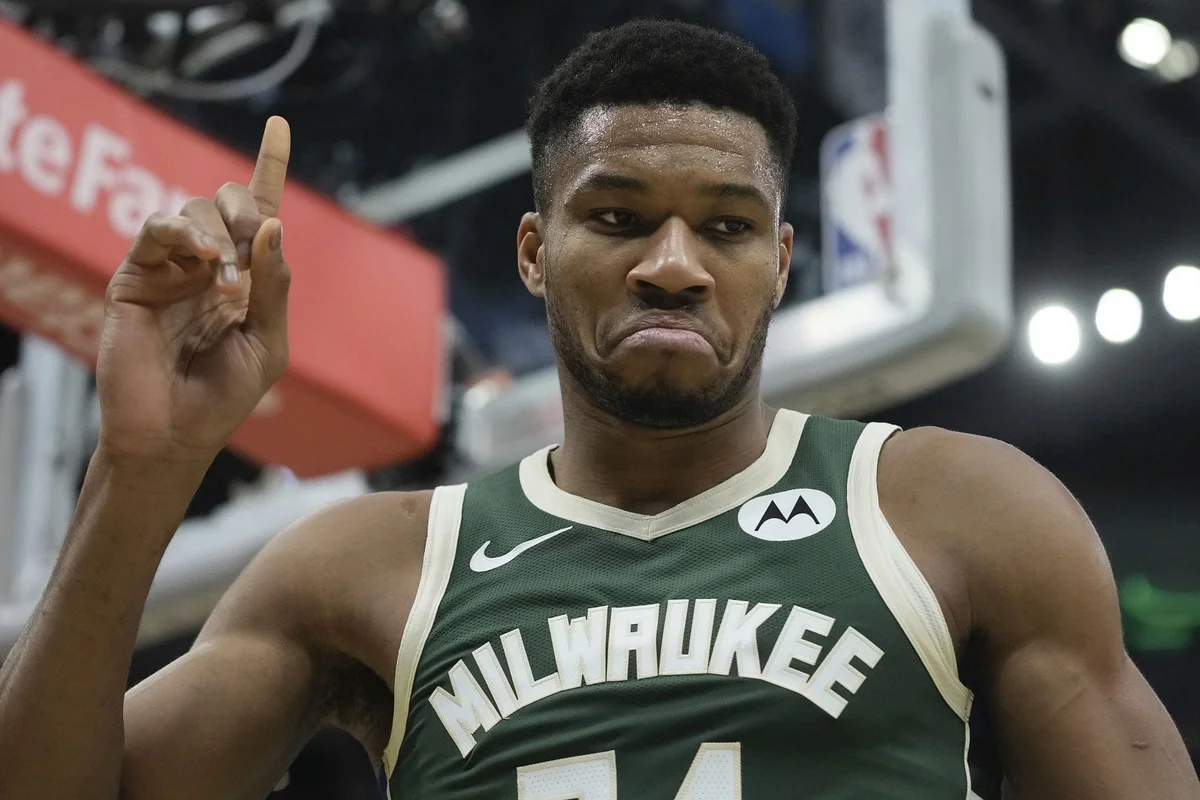
With just three days remaining before the NBA trade deadline, Giannis Antetokounmpo remains a Milwaukee Buck, though numerous teams are actively pursuing a deal involving the star player. The most frequently discussed potential landing spots are the New York Knicks, Miami Heat, Golden State Warriors, and Minnesota Timberwolves. Despite ongoing negotiations, none of these teams has yet presented an offer strong enough to entice the Bucks to trade Antetokounmpo.
At this stage, it appears that no franchise is capable of completing a trade independently. Each will likely need additional partners to assemble an offer that meets Milwaukee’s high asking price. Furthermore, the Bucks hold Antetokounmpo’s contract through the 2026-27 season and can afford to wait until the offseason to pursue a trade when more teams may enter the bidding, and more draft assets can be leveraged.
This analysis examines the most complete potential trade packages from these four prominent suitors, focusing on what it would realistically take for the Bucks to part ways with their star. These proposals reflect deals designed to question the commitment of the NBA teams involved by demanding substantial value in terms of players and draft capital. It’s important to note these mock trades exclude Thanasis Antetokounmpo’s salary due to their complexity, though it’s likely he would follow his brother in any eventual transaction.
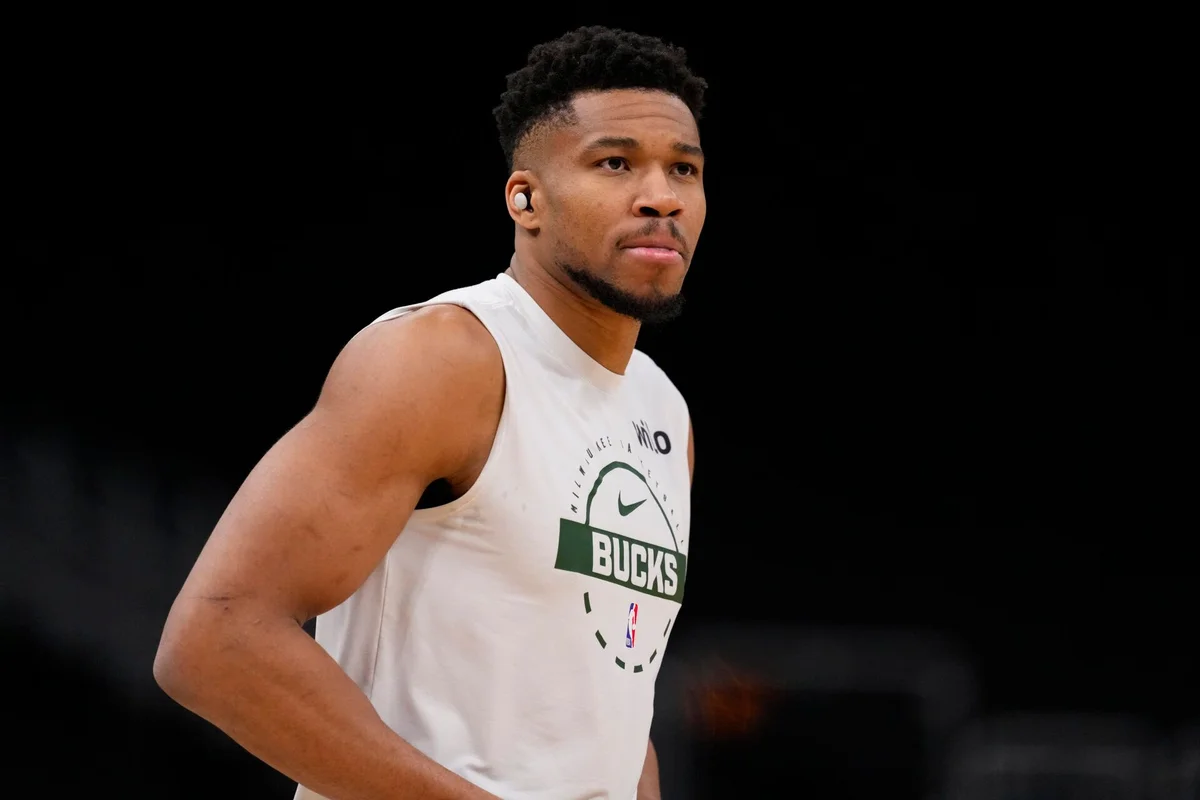
Potential Trade Offer From the New York Knicks
The Knicks would require a complicated five-team trade to pull off a deal for Giannis Antetokounmpo, involving the San Antonio Spurs, Portland Trail Blazers, and Brooklyn Nets. The Knicks’ haul would include Antetokounmpo and Kelly Olynyk, while the Bucks would receive a package with Jerami Grant, Harrison Barnes, Guerschon Yabusele, Tyler Kolek, and seven first-round picks, including various swap rights. Meanwhile, OG Anunoby would be sent to San Antonio, and Mikal Bridges would join Portland, with the Nets receiving swap rights connected to 2030.
The Knicks lack significant draft capital and would have to part with valuable wings such as Anunoby and Bridges to amass the picks Milwaukee demands. According to Athletic reporter James Edwards,
“the return is expected to be salary-matching players and, maybe, small draft compensation”
for Karl-Anthony Towns, so including him would not provide sufficient leverage in this deal.
Giving up Anunoby, the more versatile defender, and Bridges would leave New York with notable holes on the wing, though the prospect of pairing Antetokounmpo with Towns and Jalen Brunson presents an enticing offensive combination. The Knicks would maintain defensive depth with players like Josh Hart, Mitchell Robinson, and Deuce McBride, offsetting some of the losses.
San Antonio’s inclusion is critical because the Spurs have a wealth of draft assets, including multiple swap rights, enabling them to absorb Anunoby while sending picks the Bucks desire. Portland would acquire Bridges at the cost of two first-round picks, including Milwaukee’s 2030 pick, allowing them to add a strong perimeter defender and scorer without severely impacting their future assets.
The Nets function as partners by obtaining valuable swap rights while sending a 2027 Knicks first-round pick to Milwaukee. The pick is not highly valuable to Brooklyn but provides some additional draft security to the Bucks. New York also transfers its top-eight protected 2026 pick from Washington, which the Wizards are likely to retain by tanking, so its conveyance remains uncertain.
This trade reflects the complex negotiation necessary for the Knicks to even compete for Antetokounmpo at the deadline. The burden of moving multiple significant players and draft picks illustrates the heavy cost New York would face in attempting to transform its roster around the star forward.
Golden State Warriors’ Approach to Acquiring Giannis Antetokounmpo
The Warriors’ package for Antetokounmpo centers largely around draft picks and players capable of fitting within Golden State’s system. In a four-team trade scenario involving the Boston Celtics, the Warriors would receive Antetokounmpo, Anfernee Simons, Kyle Kuzma, Bobby Portis, and Xavier Tillman. The Bucks would be compensated with Jimmy Butler, Jonathan Kuminga, Buddy Hield, Brandin Podziemski, Chris Boucher, Will Richard, and five first-round picks, primarily from the Warriors and Celtics, alongside swap rights for 2031.
Golden State is willing to part with many future assets in hopes of convincing Milwaukee that having control over their first-round draft picks after Stephen Curry’s eventual retirement is worthwhile. Milwaukee’s current attitude to the Warriors’ offers is to
“go get us more of them,”
emphasizing their appetite for additional draft capital.
A key player in this negotiation is Draymond Green, a defensive stalwart who would be traded to the Celtics along with Al Horford as part of Boston’s frontcourt reshaping. This aligns with Boston’s defensive philosophy and the team’s desire to solidify a submission front line for postseason success. The Celtics would also acquire a first-round swap right from Golden State for 2027.
Boston parts with Anfernee Simons, a significant contributor to their offense, but expects that the return of Jayson Tatum will compensate for that loss. Protecting Tatum from challenging defensive assignments is a priority for the Celtics, and adding veteran defenders like Green bolsters that effort. The Celtics only give up a 2026 first-round pick in this instant, minimizing long-term damage.
Golden State would face challenges in traditional center play without a dedicated big man, possibly relying on Antetokounmpo to guard the paint or revitalizing Xavier Tillman. Player development under coach Steve Kerr, who has a history of maximizing versatile talents like Kyle Kuzma, will be vital. Portis offers reliable scoring to bolster bench depth.
Though the Warriors’ defensive frontcourt would be thinner, the anticipated offensive firepower from pairing Stephen Curry and Antetokounmpo could offset this issue. There was also consideration of adding Zach LaVine via another trade from the Kings to enhance offensive output, but ultimately the Warriors would likely avoid accumulating three max contracts.
Miami Heat’s Proposal to Land Giannis Antetokounmpo
Miami’s bid is another multi-faceted deal designed around Milwaukee’s appetite for future draft assets rather than simply player swaps. The Heat would take in Antetokounmpo along with Kyle Kuzma, Bobby Portis, Pat Connaughton, and send a 2027 first-round pick (which they’d regain through a side agreement). The Bucks would receive Tyler Herro, Terry Rozier, Josh Green, Nikola Jović, Kel’El Ware, Kasparas Jakučionis, four future first-round picks, and swap rights.
The Heat have a challenge related to the Stepien Rule, as Charlotte controls Miami’s 2027 pick. To navigate this, the Hornets receive Andrew Wiggins and 2029 first-round swap rights, allowing the Heat to regain their 2027 pick to include in the deal. Wiggins provides Charlotte with a valuable two-way wing, and the Hornets have surplus draft assets to negotiate with, including three first-round selections in 2027.
This workaround enables Miami to offer Milwaukee several first-round picks stretching out to 2032 alongside young players with potential. The inclusion of Kel’El Ware, an athletic, promising big man, addresses Milwaukee’s rebuild potential, while Wisconsin native Tyler Herro could help maintain competitiveness and engage local fan support.
Although Miami would have to part with Andrew Wiggins, their defensive core anchored by Bam Adebayo, Antetokounmpo, and Davion Mitchell remains formidable. Additionally, Norm Powell brings additional offense. While far from a perfect fit, the Heat’s offer balances player value and future draft capital in a way that could appeal to Milwaukee.
Complex Trade Scenario Involving the Minnesota Timberwolves
Perhaps the most complicated proposal comes from Minnesota, involving a five-team, 19-player trade. The Timberwolves would acquire Giannis Antetokounmpo, Myles Turner, Kyle Kuzma, Bobby Portis, and Julian Phillips. Meanwhile, the Hornets, Celtics, and Bulls each receive various players, with Milwaukee obtaining Anfernee Simons, Naz Reid, Zach Collins, Kevin Huerter, Grant Williams, Sam Hauser, Dalen Terry, Joan Beringer, Terence Shannon Jr., Bones Hyland, and five first-round picks with related protections and swap rights.
This massive transaction would require Milwaukee to waive six players with minimal impact on the team’s future, including Thanasis Antetokounmpo, Amir Coffey, Andre Jackson, Taurean Prince, Gary Harris, and Cole Anthony, to comply with salary and roster requirements.
The Timberwolves, similar to the Knicks, lack sufficient draft capital and must trade their young talent to purchase the picks necessary for Milwaukee. Jaden McDaniels, Minnesota’s most valuable wing, would be traded to Charlotte or Utah, leveraging their draft surpluses and needs for strong perimeter defenders. McDaniels’ profile as a 25-year-old All-Defensive forward with offensive upside gives him wide appeal, potentially matching the value of Desmond Bane’s recent trade to Orlando, which yielded multiple picks.
On the frontcourt side, trading Rudy Gobert to Boston strengthens the Celtics’ defense, with Gobert providing a superior rim protector to their current lineup. The Celtics also receive Simons and Hauser to compensate for the loss of Gobert’s presence. Julius Randle, with his offensive abilities but defensive limitations, would be sent to Chicago, which gains a capable scorer and impact player as it pursues playoff contention. Chicago’s first-round pick compensation is moderately protected.
In exchange, Milwaukee gains players who can serve as salary fillers or young prospects, such as Joan Beringer and Terence Shannon. A swap of Naz Reid for Myles Turner aligns with team needs on both sides, as Turner offers stronger defense, while Reid offers youth and tradeability.
The Timberwolves’ resultant roster would be a unique combination of their existing backcourt—featuring Anthony Edwards, Donte DiVincenzo, and Mike Conley—and a frontcourt including Antetokounmpo, Turner, Kuzma, and Portis. Despite the enormous overhaul, Minnesota would retain one additional tradable first-round pick to further refine the roster. Executive Tim Connelly’s bold management style may drive this ambitious attempt to pair Edwards and Antetokounmpo as cornerstones of the franchise.
Implications and Path Forward
None of the trade proposals currently on the table offers an easy resolution for the Bucks or prospective suitors. Milwaukee’s position is that they can wait until the offseason when more teams can participate and draft capital availability improves, increasing market competition and yielding possibly better returns. Each package presented here carries significant drawbacks for the acquiring teams—whether it be loss of important players, multiple future draft picks, or cap complexities.
The eventual resolution concerning Giannis Antetokounmpo’s status will have far-reaching consequences for the NBA’s competitive balance. Should a trade occur at the deadline, it would dramatically reshape the receiving franchise’s roster and future trajectory. It would also initiate a new phase for Milwaukee, which would enter a rebuilding period with a bounty of picks and young players but no longer led by their former superstar.
As the trade deadline approaches, the league watches intently to see if an agreement is reached or if Milwaukee opts to retain Antetokounmpo for the remainder of the season, setting the stage for a potentially more expansive and competitive market in the offseason.
